


Avoid gray markets
Detect gray market activity earlier with SCRIBOS 360
Gray market sales can damage pricing strategies, weaken distributor relationships, reduce margins, and erode customer trust. They are especially difficult to manage because the products are usually genuine. The risk arises when products are diverted from their intended distribution path and sold outside approved markets, channels, or commercial agreements.

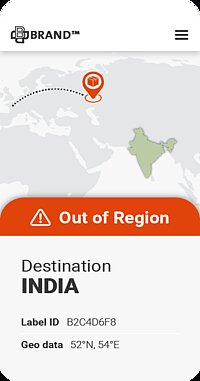
KURZ SCRIBOS helps brands identify potential unauthorized distribution through SCRIBOS 360, a digital brand protection and product authentication platform that connects product verification with scan-based market visibility.
SCRIBOS 360 connects physical products with unique digital identities. Each authentication scan creates a data point that helps brands understand where products are being checked, whether they appear outside intended markets, and where unusual distribution patterns may be emerging.
When a product is scanned outside its assigned market, SCRIBOS 360 flags the event and sends a direct notification to the brand. The brand can then review the scan data and decide whether follow-up is needed.

Risks of gray market activity for brands and manufacturers
Gray market products are genuine products. The issue is not product authenticity itself, but unauthorized diversion. When original products are sold outside approved markets or channels, this can create commercial, operational, and customer-facing risks.
Gray market activity can create risks across authorized distribution networks, including:
- Price erosion across regions and sales channels
- Conflicts with authorized distributors and partners
- Loss of control over regional pricing strategies
- Distorted sales and forecasting data
- Reduced visibility across distribution networks
- Warranty and service costs from unauthorized sales
- Reputational damage caused by inconsistent customer experiences
- Difficulty identifying supply chain leaks and unauthorized resellers

Risks for consumers
Consumers may also be affected when genuine products are sold through unauthorized channels, including:
- Products without valid warranty coverage
- Limited access to customer support or service
- Products not intended for the local market
- Missing regulatory or compliance information
- Delayed or restricted product recalls and safety notifications
- Uncertainty about product origin and authorized distribution
How SCRIBOS 360 helps detect gray market activity
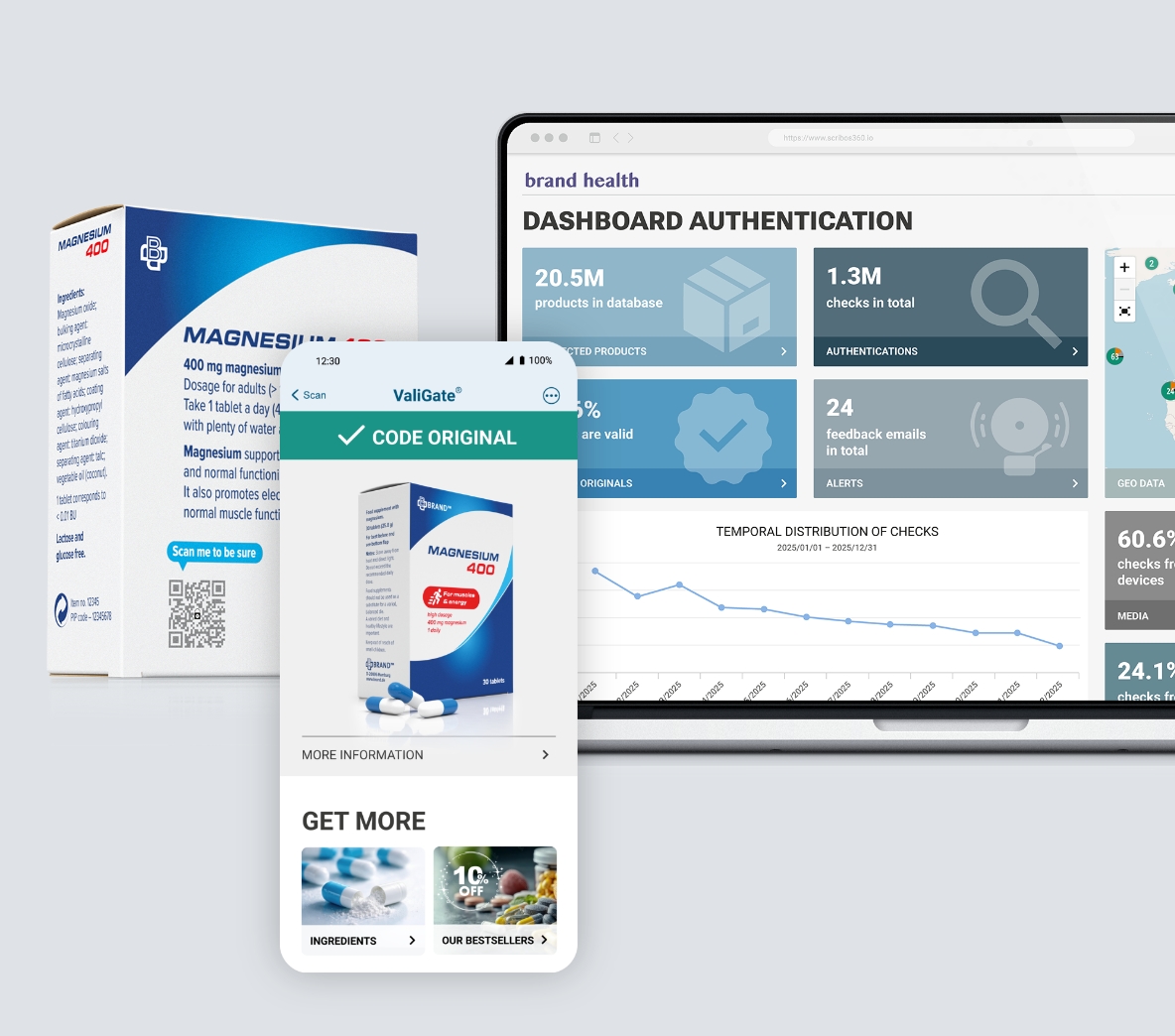
Assign unique product identities
Products are protected with secure labels or markings linked to unique digital identities. Each scan connects the physical product with SCRIBOS 360 and creates a data point that can support authentication, analysis, and market visibility.
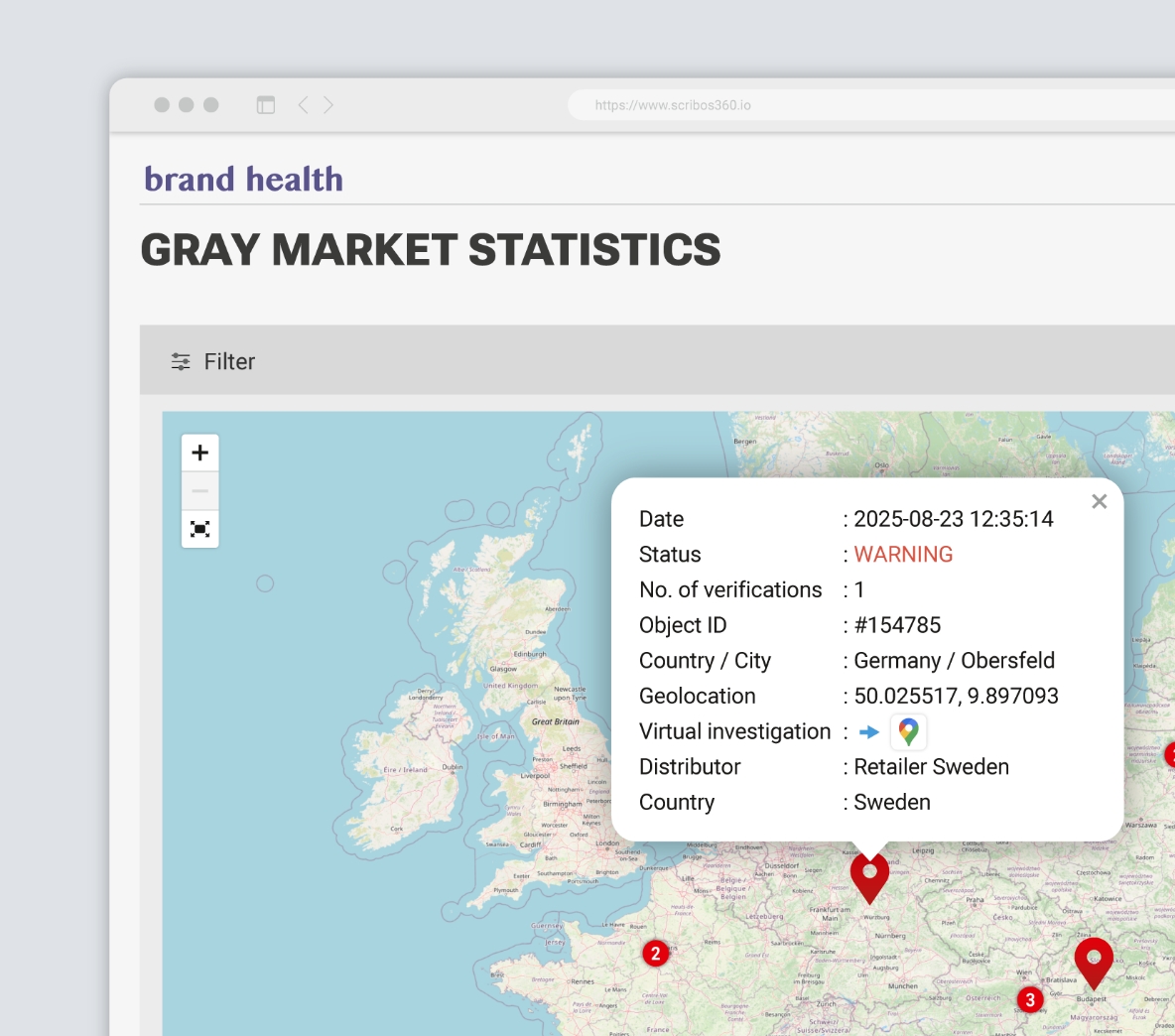
Define authorized markets
Brands can define approved target markets in SCRIBOS 360 by assigning destination details such as region, country, or retailer to the relevant product or label records. This data can be uploaded directly in SCRIBOS 360 or, depending on the setup, captured via the ScanFIRST App.
The ScanFIRST App supports logistics data capture by mapping packaging hierarchies. It allows users to assign products to boxes and larger logistics units, such as pallets. During shipment, these units can be scanned and linked to their intended destinations, creating a structured data basis for gray market control in SCRIBOS 360.
Subsequent authentication scans are then matched against the predefined target regions, helping brands identify potential out-of-region activity.
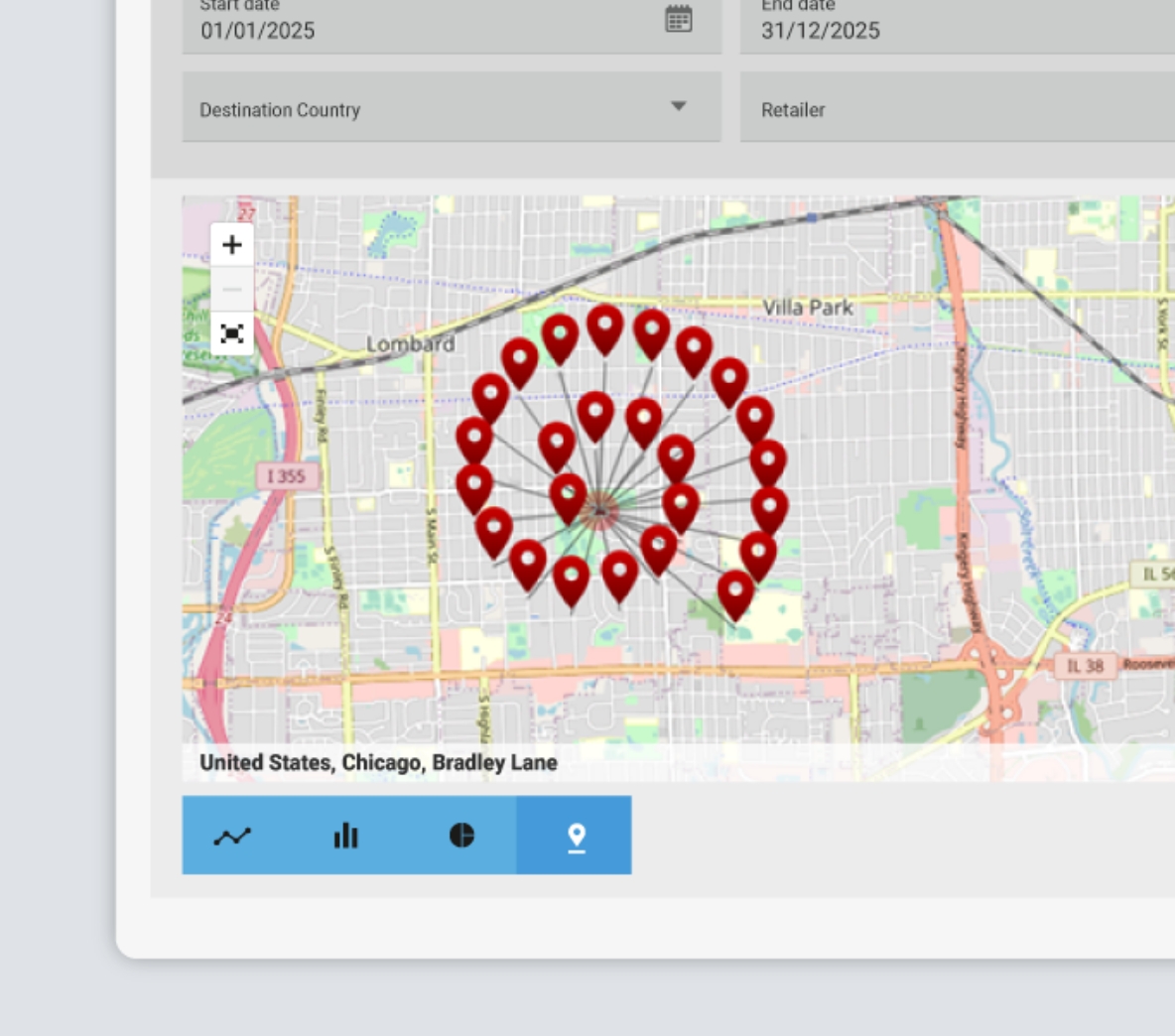
Analyze scan locations and distribution patterns
Each authentication scan contributes location-based data that helps brands understand where products are being checked in the market. Over time, this scan data can reveal unusual patterns, such as repeated checks outside the assigned region, unexpected scan concentrations, or product activity in channels that require further review.
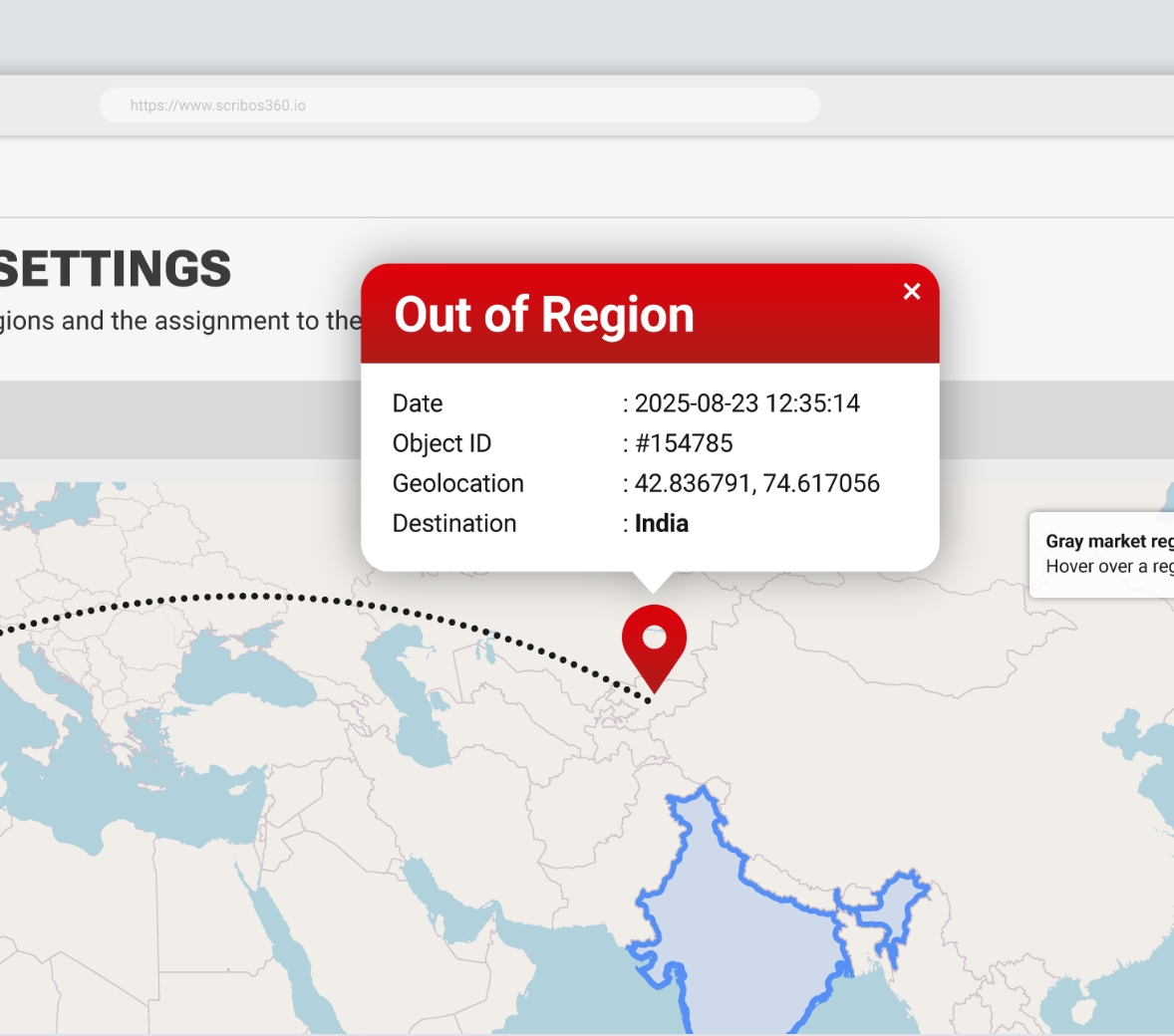
Flag potential unauthorized distribution
When a product is scanned outside its assigned market, SCRIBOS 360 flags the event and sends a direct notification to the brand. The brand can then review the scan data and decide whether follow-up is needed.

Take targeted action
Out-of-region alerts and scan data give brands a clearer basis for follow-up. They can use these insights to:
- Investigate possible distribution leaks
- Review suspicious reseller or distributor activity
- Protect regional pricing strategies
- Support enforcement actions with structured scan data
- Strengthen control across authorized distribution networks
Why detect gray market activity early
The earlier unauthorized distribution is identified, the easier it becomes to reduce the risk of pricing conflicts, protect distributor relationships, and prevent gray market activity from spreading across regions and sales channels.
SCRIBOS 360 helps brands recognize suspicious scan patterns earlier and use structured data to support more targeted follow-up.
Scelto da marchi globali


















Protect your
distribution network with
SCRIBOS 360
With SCRIBOS 360, brands gain scan-based visibility into where products are being checked across global markets. This helps them identify out-of-region activity, investigate possible diversion, and respond before unauthorized distribution creates larger commercial or operational challenges.
Book a SCRIBOS 360 demo to learn how KURZ SCRIBOS helps brands improve scan-based market visibility and support targeted action against gray market activity.
FAQ – Gray markets
What is gray market activity?
Gray market activity occurs when genuine products are sold outside approved markets, channels, or commercial agreements. The products are not necessarily counterfeit, but they may have been diverted from their intended distribution path, creating risks for pricing, distributor relationships, warranty handling, and customer trust.
Why are gray market products a risk if they are genuine?
Gray market products can still create commercial and operational risks because they may appear in markets where they were not intended to be sold. This can lead to price conflicts, channel disputes, inconsistent customer service, warranty issues, and reduced visibility across authorized distribution networks.
How can brands detect gray market activity?
Brands can detect potential gray market activity by connecting product authentication with scan-based market visibility. When products are scanned, the authentication data can show where checks are taking place and whether products appear outside their assigned destination markets.
How does product authentication help identify gray market products?
Product authentication links each protected product to a unique digital identity. When the product is scanned, the scan creates a data point that can help brands identify suspicious patterns, such as repeated checks outside approved regions or unusual activity in markets that require further review.
How does SCRIBOS 360 help detect gray market activity?
SCRIBOS 360 helps brands compare authentication scans with predefined target regions. If a product is scanned outside its assigned market, SCRIBOS 360 can flag the event and send a direct notification to the brand, supporting earlier review of potential gray market activity.
What happens when a product is scanned outside its assigned market?
When a product is scanned outside its assigned market, SCRIBOS 360 flags the out-of-region event and notifies the brand. The brand can then review the scan data, check whether the event indicates possible diversion, and decide whether follow-up action is needed.
What data is needed to define authorized markets in SCRIBOS 360?
Brands can define authorized markets by assigning destination information such as country, region, or retailer to the relevant product or label data in SCRIBOS 360. This information creates the basis for comparing later authentication scans with the intended destination market.
What actions can brands take after detecting out-of-region scans?
After reviewing out-of-region scan data, brands can investigate possible distribution leaks, review suspicious reseller or distributor activity, protect regional pricing strategies, support enforcement actions with structured scan data and strengthen control across authorized distribution networks.
How is gray market detection different from counterfeit detection?
Counterfeit detection focuses on identifying products that are not genuine. Gray market detection focuses on genuine products that appear outside approved markets or distribution channels. Both can be supported by product authentication, but they address different risks.
Why is early gray market detection important?
Early detection helps brands reduce the risk of pricing conflicts, protects distributor relationships and prevents gray market activity from expanding into additional regions or sales channels. Scan-based visibility gives brands a clearer basis for deciding where follow-up is needed.
What is SCRIBOS 360 Gray Market Protection?
SCRIBOS 360 Gray Market Protection is a module that helps brands identify potential gray market activity using predefined regions, assigned label information, scan data, and out-of-region alerts. It provides geodata-based visibility and supports brands in reviewing suspicious distribution patterns.
Related Blog Post

The gray market – risks and countermeasures
With increasing globalisation, the worldwide availability of products is growing steadily. At the same time, the danger of misuse is also increasing. A good example is, traders taking advantage of price differences in the different markets through parallel imports or re-imports.
Read more

From product scan to action: How integrated brand protection works
Physical security features on a product form the foundation of effective brand protection. Combined with digital authentication, the product scan becomes the starting point for data analysis, hotspot detection, test purchases, takedowns, and other measures. Practical examples from licensed products, the agricultural sector, and lubricants show how integrated brand protection can work across different markets.
Read more