Three-Dimensional Impact on a Flat Surface
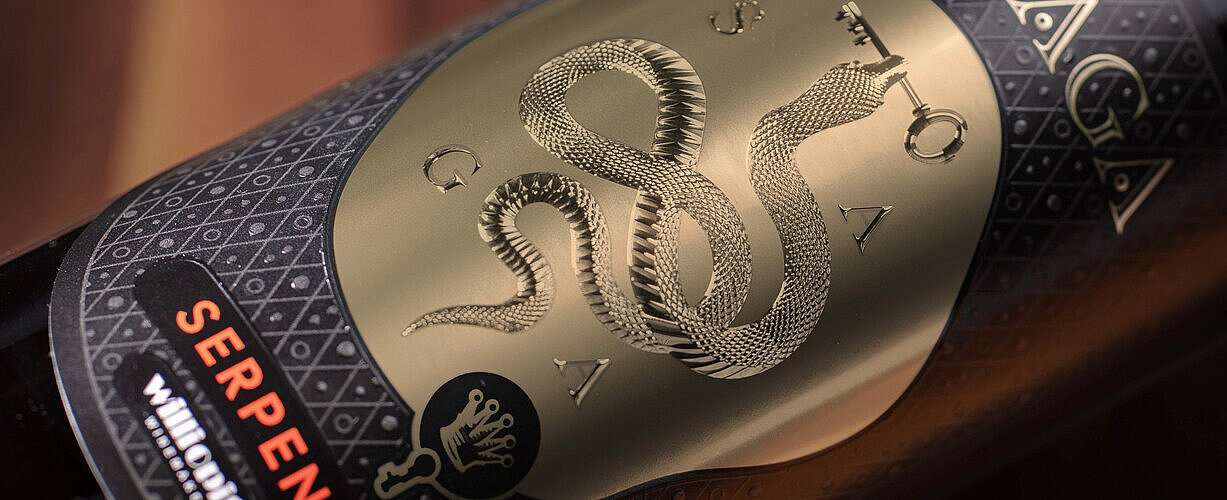
Image caption | CASAGA®: The snake-and-key motif uses TRUSTSEAL® SFX as the visual and narrative centerpiece of the label.
Today, packaging must do far more than protect products, provide information, and meet regulatory requirements. In many product categories, the first impression determines whether a product is noticed on the shelf at all. As a result, the packaging surface has become a communication medium in its own right. TRUSTSEAL® SFX from KURZ SCRIBOS demonstrates how an optical 3D effect can expand that surface—not as a decorative add-on, but as a carefully designed interaction between imagery, light, material, and industrial production.
The Technology Behind the Effect
TRUSTSEAL® SFX is an optical 3D element based on specially engineered structures and their interaction with light. The perception of depth is created through reflection, refraction, viewing-angle dependency, and contrast shifts. The key point is that the surface itself remains essentially flat; the depth is created visually. This separation between a flat substrate and a three-dimensional visual effect makes the technology particularly attractive for labels, folding cartons, paper-based packaging, and similar applications.
From a design perspective, SFX opens up multiple possibilities. A graphic element can appear more dimensional, suggest movement, or convey a material characteristic that aligns with the product itself. At the same time, the metallized surface can be overprinted with color and combined with additional effects. The result is not a generic shine that behaves the same way across all designs, but a custom-developed surface whose visual impact must be derived from the specific brand concept.
This aspect is equally important from a production standpoint. SFX can be applied using either hot stamping or cold transfer and can be precisely implemented as a registered standalone design element. As a result, the technology is not limited to experimental one-off projects. However, it does require early coordination between design, embellishment, substrate selection, printing, and finishing. Brands that treat SFX as a decorative feature added at the end of the process only tap into a fraction of its potential.
Technical Overview: TRUSTSEAL® SFX
Principle:
Optical 3D effect created by light-interacting structures on a flat surface.
Visual Effect:
Perceived depth, movement, changing light effects, and—depending on the design—a metallic or liquid-like appearance.
Application:
Can be applied through hot stamping or cold transfer; suitable for labels, folding cartons, and various packaging materials.
Design:
Imagery, shape, color, overprinting, and integration into the overall packaging concept are developed individually for each customer.
Additional Benefit:
The unique structure enhances differentiation and brand recognition while making simple imitation more difficult.
CASAGA®: Turning a Legend into a Label
The CASAGA® wine series from Austrian winemaker Willi Opitz illustrates how effectively an SFX effect can be developed from a narrative concept. Willi Opitz is internationally recognized within the wine industry for his innovative approach to winemaking. This background is relevant because it lends credibility to the project. However, the primary focus here is how a brand story can be translated into packaging design.
CASAGA® is based on the legend of a snake princess from the Lake Neusiedl region. This narrative is not merely referenced in text—it is condensed into a visual design language. The snake holding a key forms the centerpiece of the label. Through TRUSTSEAL® SFX, the motif gains a striking sense of depth and presence. The image appears dimensional and metallic without relying on an actual three-dimensional relief structure.
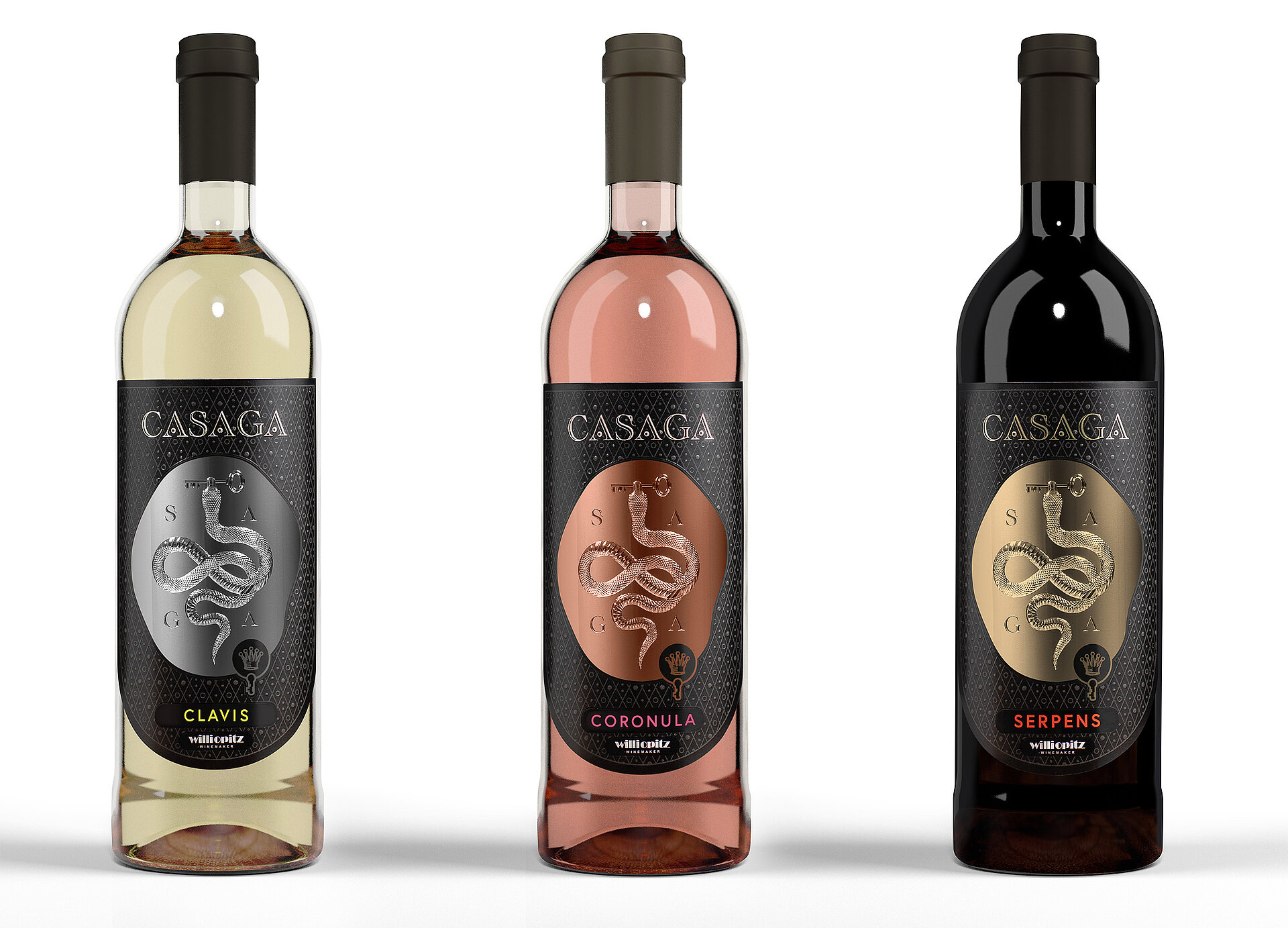
The implementation succeeds because multiple design elements work together. The metallized SFX element has been overprinted with color, including gold and rosé tones. Additional tactile blind embossing is used for features such as the CASAGA® wordmark and the diamond-pattern background. The result is a label that does more than communicate information—it becomes part of the product’s story. The key is not merely an ornament. It becomes an element of the product narrative: opening the bottle symbolically means receiving the key.
The CASAGA® range demonstrates how a central SFX motif can be adapted across different color variations while remaining a recognizable brand signature.
The most effective use of SFX occurs when the effect enhances an idea rather than overshadowing the design.
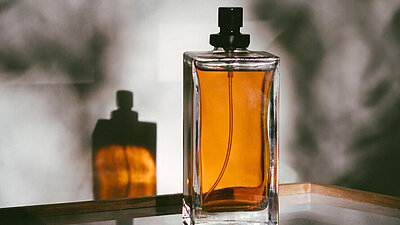
Syoss OLEO INTENSE: Making Product Benefits Visible Through Surface Design
The packaging project for Henkel’s Syoss OLEO INTENSE takes a different approach. Here, the focus was not a brand legend but a clear product benefit: the oil-based formulation. The packaging was intended not only to communicate this benefit but to make it visually tangible.
The original concept for the central key visual—the oil droplet—was developed by baries design. The Düsseldorf-based packaging design agency created the droplet as the defining visual element, connecting care, shine, and the fluid characteristics of the formula. Henkel contributed the brand requirements, product positioning, and retail perspective. KURZ SCRIBOS provided the optical 3D technology and finishing expertise through TRUSTSEAL® SFX. MM Packaging translated the concept into an industrially produced folding carton featuring high-quality printing, hot-stamping applications, and premium finishing.
This division of responsibilities makes the project particularly interesting from a professional perspective. The oil droplet is more than a graphic symbol. Through light interaction, depth effects, and surface appearance, it visually resembles actual oil. The packaging therefore communicates the product benefit not only through text or claims, but through a surface that consumers can immediately perceive. At the same time, the project demonstrates that SFX can be successfully implemented within large-scale consumer brands and highly scalable packaging production processes.
Customization Determines the Quality of the Result
CASAGA® and Syoss OLEO INTENSE differ significantly in category, target audience, and brand strategy. That is precisely why they make such a valuable comparison. In the case of CASAGA®, SFX transforms a regional legend into a memorable label design. For Syoss, SFX makes a functional product benefit visually and emotionally understandable. In both examples, the effect is driven by the brand’s core message rather than by a decorative element selected afterward.
This highlights the most important success factor: customization. Shape, structure, metallization, color, print design, and placement must align with the product and the specific consumption environment. A wine label requires a different visual narrative than a beauty-product folding carton. At the point of sale, success depends not only on technical sophistication but also on how clearly the design communicates within its actual shelf environment.
For brand owners, design agencies, and packaging manufacturers, this means that technical capability alone is not enough. SFX creates value when it is integrated into the concept phase from the beginning and when all stakeholders share the same design and production objectives. The examples show how KURZ SCRIBOS, baries design, MM Packaging, and the respective brand teams collaborate precisely at this intersection between concept, material, finishing, and industrial production.
Perspective and Recommendation
TRUSTSEAL® SFX should not be viewed merely as an effect technology designed to generate additional attention. Its more sustainable value emerges when optical depth serves a specific purpose: making a story more visible, a product benefit easier to understand, or a brand more recognizable on the shelf.
For brands and packaging development teams, the recommendation is clear: SFX should be planned early, centered around a specific visual concept, and developed collaboratively with all relevant partners. The process should always begin with a strong idea—such as the snake-and-key motif for CASAGA® or the oil droplet for Syoss. Material selection, printing, embellishment, tactile elements, and industrial production should then be aligned around that concept.
When used in this way, TRUSTSEAL® SFX becomes more than a decorative enhancement. It becomes a meaningful differentiation tool that combines visual impact with industrial feasibility. It gives brands the opportunity not only to create more attractive packaging but also to communicate their message with greater precision. Ultimately, the true measure of success is not the effect itself, but whether it makes the brand clearer, the product more understandable, and the shelf presence more distinctive.
Recommendation: Use TRUSTSEAL® SFX wherever a clear brand or product concept can be translated into a distinctive surface design. When that happens, packaging embellishment becomes a meaningful design tool.