From Product Scan to Action: How Integrated Brand Protection Works

Why isolated brand protection measures are no longer enough
Counterfeiting is no longer a localized problem. Counterfeit products move across international supply chains, online marketplaces, social media channels, gray markets, and physical sales points. For brand owners, it is therefore becoming increasingly difficult to combat counterfeits effectively through isolated measures such as occasional online monitoring or purely reactive legal action.
The scale of the problem is significant. A study published by OECD and EUIPO in May 2025 estimates the global trade in counterfeit goods at around USD 467 billion based on the latest available data for 2021. That corresponds to about 2.3 percent of global trade.
Europe shows a similarly clear picture. In 2024, around 112 million counterfeit goods with an estimated retail value of EUR 3.8 billion were seized in the European Union.
At the same time, counterfeiters are changing their methods. Online platforms, small-parcel shipments, global sourcing networks, and digital tools make distribution and concealment easier. In this environment, individual protection measures often fall short if they are not connected to one another.
For brand owners, this means brand protection must start at the product level, enable digital authentication, and turn the resulting data into targeted action. That is exactly where the value of integrated KURZ SCRIBOS solutions lies. Physical security features, digital product authentication, SCRIBOS 360, and Online Brand Protection become a connected system that not only makes individual counterfeit products identifiable, but also makes risks visible, classifies them, and supports targeted action.
Product authentication starts with the physical product
Every effective anti-counterfeiting strategy starts with a reliable authentication feature on the product or packaging. Without it, it is difficult to determine with confidence whether a specific item is genuine, suspicious, or counterfeit. At the same time, without a direct link to the product, the data needed to identify suspicious patterns systematically, track counterfeit activity, and prepare further enforcement measures is missing. KURZ SCRIBOS offers optical, digital, and hybrid security solutions that can be configured individually depending on the product, risk profile, market, and target audience.
These include, for example:
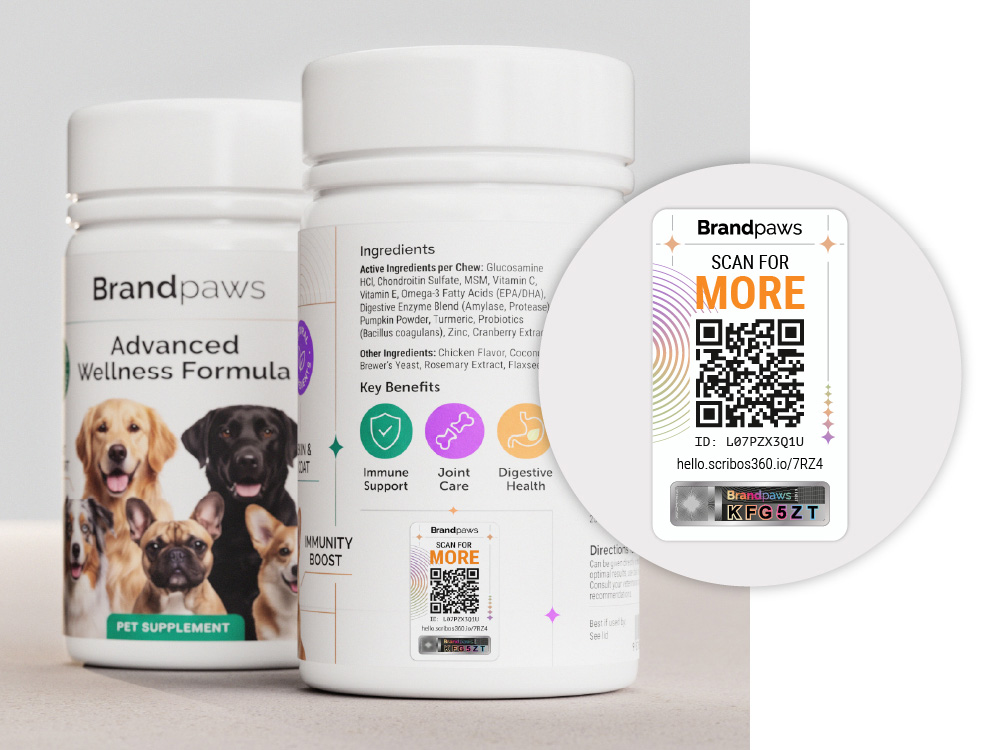
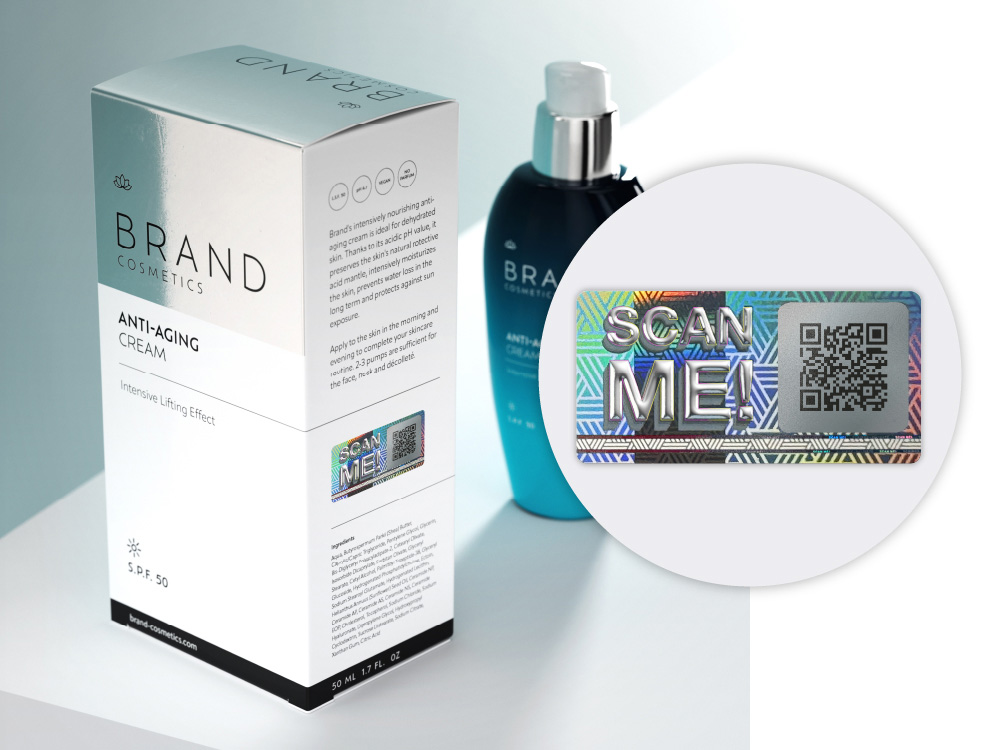
- Security labels that can combine visual security features, unique IDs, QR codes, or digital authentication functions
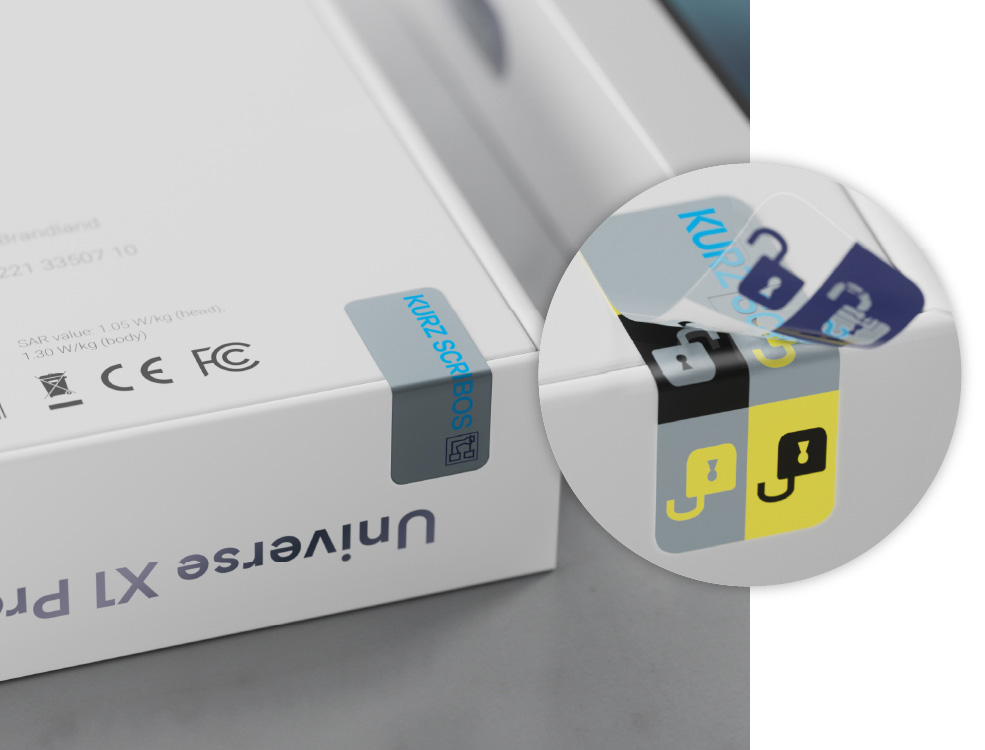
- Security seals that can show whether a package has already been opened or tampered with
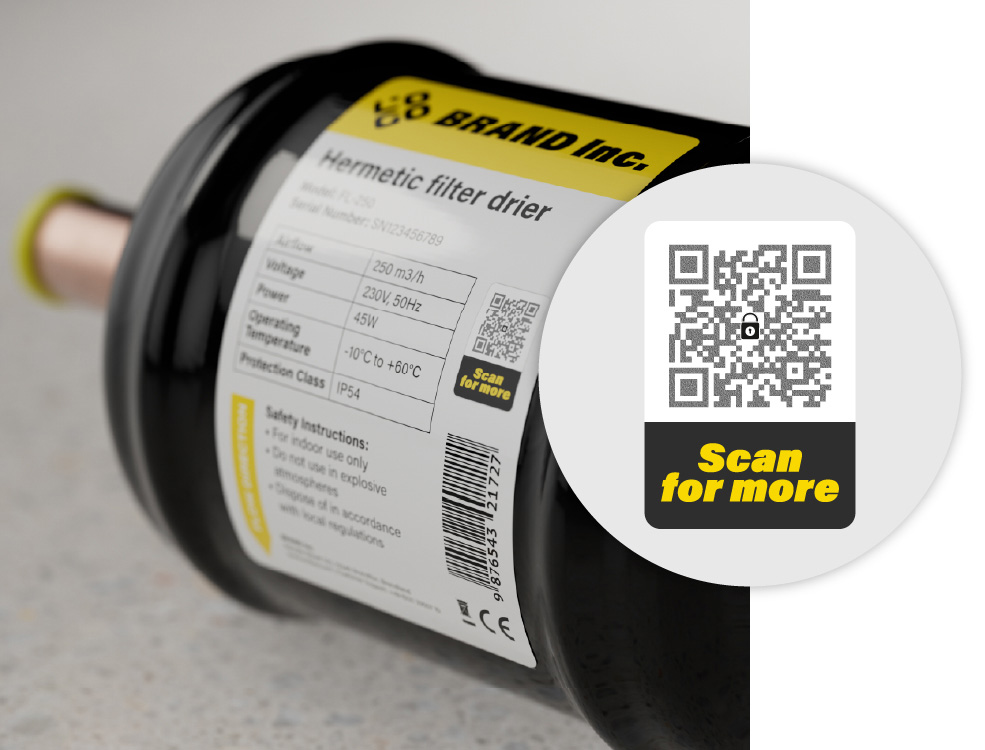
- Directly printed security features, for example ValiGate® Direct Print, where a copy-protected QR code is printed directly onto the packaging or an existing label design
- Hybrid solutions that combine visual authentication with digital verification via smartphone
The key point is not the individual technology itself, but the role it plays in the overall system. A security label or a printed security feature does not protect only the individual item. When combined with digital authentication, it can also become a secure entry point into a data-driven brand protection process.
Depending on the solution, consumers, retail partners, inspectors, investigators, and customs authorities can verify products visually or by smartphone to determine whether a product is authentic. In the case of digital or hybrid solutions, this also creates a data point that can be used for further analysis and protection measures.
What happens after the scan
A product scan is more than an authenticity check. It is the moment a physical product becomes a digital touchpoint that can be tracked and analyzed.
At KURZ SCRIBOS, SCRIBOS 360 forms the digital platform behind many solutions. Every scan of a connected security feature can generate authentication data that is captured, analyzed, and used for brand protection decisions in SCRIBOS 360.
Typical areas of analysis include:
- Counterfeit hotspots: Regional clusters of suspicious scans can be visualized on interactive maps and may indicate where unauthorized products could be circulating
- Gray market trade: If products are scanned outside their intended target markets, this may indicate unauthorized redistribution or parallel trade
- Unusual distribution patterns: Repeated scans, unusual time stamps, high scan frequencies, or suspicious combinations of location and product can trigger deeper analysis
- Overproduction detection: Through B2B ordering and volume control, label and production quantities can be managed more transparently
- Customer and market feedback: User feedback, suspicious product reports, or uploaded images can provide additional indications
In this way, SCRIBOS 360 becomes the link between the product, the market, and the brand protection team. Individual product scans remain more than isolated authenticity checks; when aggregated, they can provide indications of counterfeit activity, gray market movement, unusual distribution patterns, or unauthorized production volumes.
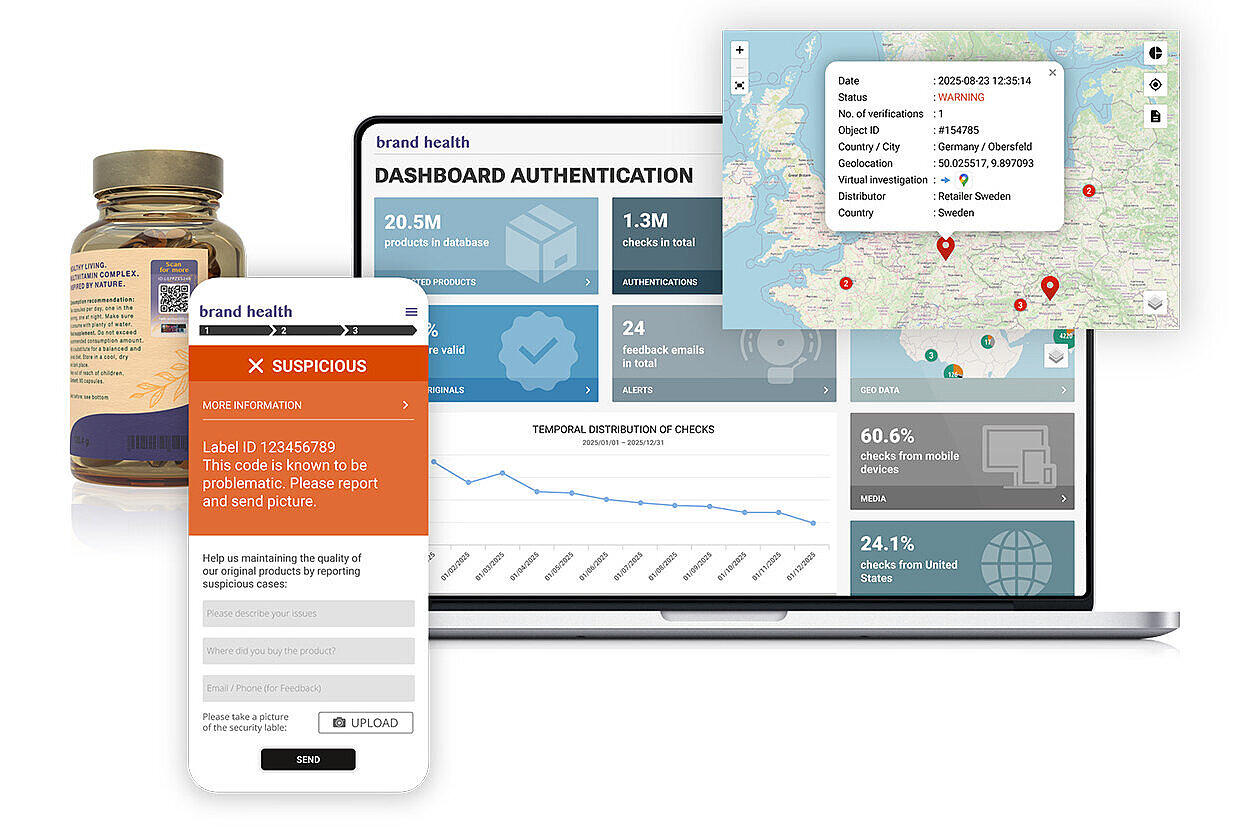
This visibility is especially important because counterfeit structures are becoming more dynamic. Online platforms, small-parcel shipments, international reseller networks, and changing distribution channels make purely reactive measures more difficult. Brand owners therefore need a structured process that connects physical product security, digital authentication, data analysis, and operational follow-up measures.
From scan data to concrete measures
Data alone does not protect a brand. What matters is whether it leads to traceable, prioritized, and actionable measures.
That is exactly why the transition from product authentication to Online Brand Protection is so important. When scan data reveals suspicious patterns, it can serve as the starting point for further steps. Depending on the case and legal assessment, these can include:
- Risk assessment and prioritization of suspicious patterns
- Online monitoring of marketplaces, shops, websites, and social media channels
- Further investigations into suspicious sellers, offers, or distribution channels
- Test purchases to verify specific suspicions
- Takedowns of infringing offers or content
- Documentation for internal, legal, or regulatory follow-up processes
- Communication measures to raise awareness among retail partners, consumers, or other stakeholders
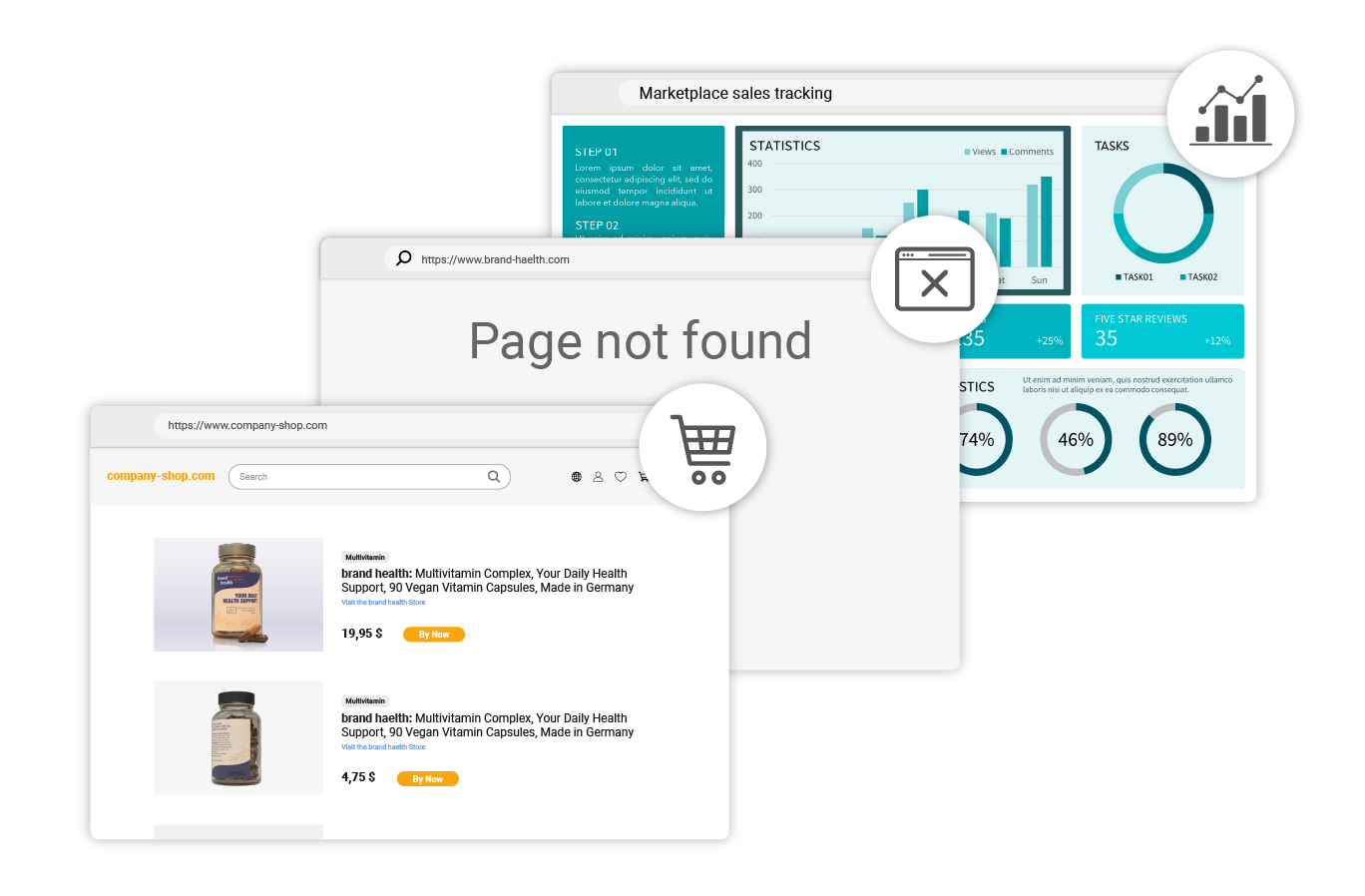
Online monitoring involves checking online shops, online marketplaces, social media channels, websites, and domains for suspicious or infringing offers. For brands whose products are frequently traded through digital channels, this step is central.
Major marketplaces such as Amazon, eBay, Temu, Alibaba, Shein, Taobao, or Mercado Libre, as well as social media channels such as Facebook and TikTok, give counterfeiters direct access to end consumers. The importance of this channel is also reflected in parcel volumes: According to EUIPO, around 144,000 parcels with counterfeit goods enter Germany every week. Scan data from SCRIBOS 360 can help prioritize suspicious regions, products, or seller structures more precisely and prepare further measures such as investigations, test purchases, or takedowns.
In cooperation with specialized Online Brand Protection partners such as globaleyez, such indications can be examined further. Suspicious offers, seller profiles, pricing structures, domains, or recurring patterns are analyzed and documented. If suspicion is confirmed, test purchases can be used to examine specific offers and products in more detail.
Test purchases play an important role here because they help connect digital indications with physical products. A suspicious online offer is not just observed; it is verified against a real product. The results can then be documented and used for further internal, operational, or legal assessment.
If suspicions are confirmed, takedowns and enforcement measures can follow. This includes the removal of infringing content and offers from online shops, social media channels, online marketplaces, websites, or domains. In this way, Online Brand Protection becomes more than a monitoring tool; it becomes an active part of the brand protection strategy.
For some original manufacturers, the step from online to offline is also relevant. Information from product scans, online research, or test purchases can help prepare physical inspections more effectively. Depending on the case, this may include checks at retailers, physical markets, or major trade fairs. In suitable cases, the relevant authorities or law enforcement bodies can also be involved, for example when further measures such as searches, seizures, or investigations are required.
Cooperation with customs authorities can also be supported by structured information. Data, findings, and indicators from SCRIBOS 360, from test purchases, or from Online Brand Protection processes can help sharpen risk profiles and provide relevant indications. Depending on the legal assessment, such information can play a role, for example, in border seizure requests or in the preparation of further IP enforcement measures.
Based on carefully documented evidence, brand owners can finally assess whether civil or criminal proceedings should be initiated. However, which measures are possible and appropriate always depends on the specific case, the applicable legal framework, and the quality of the documented information.
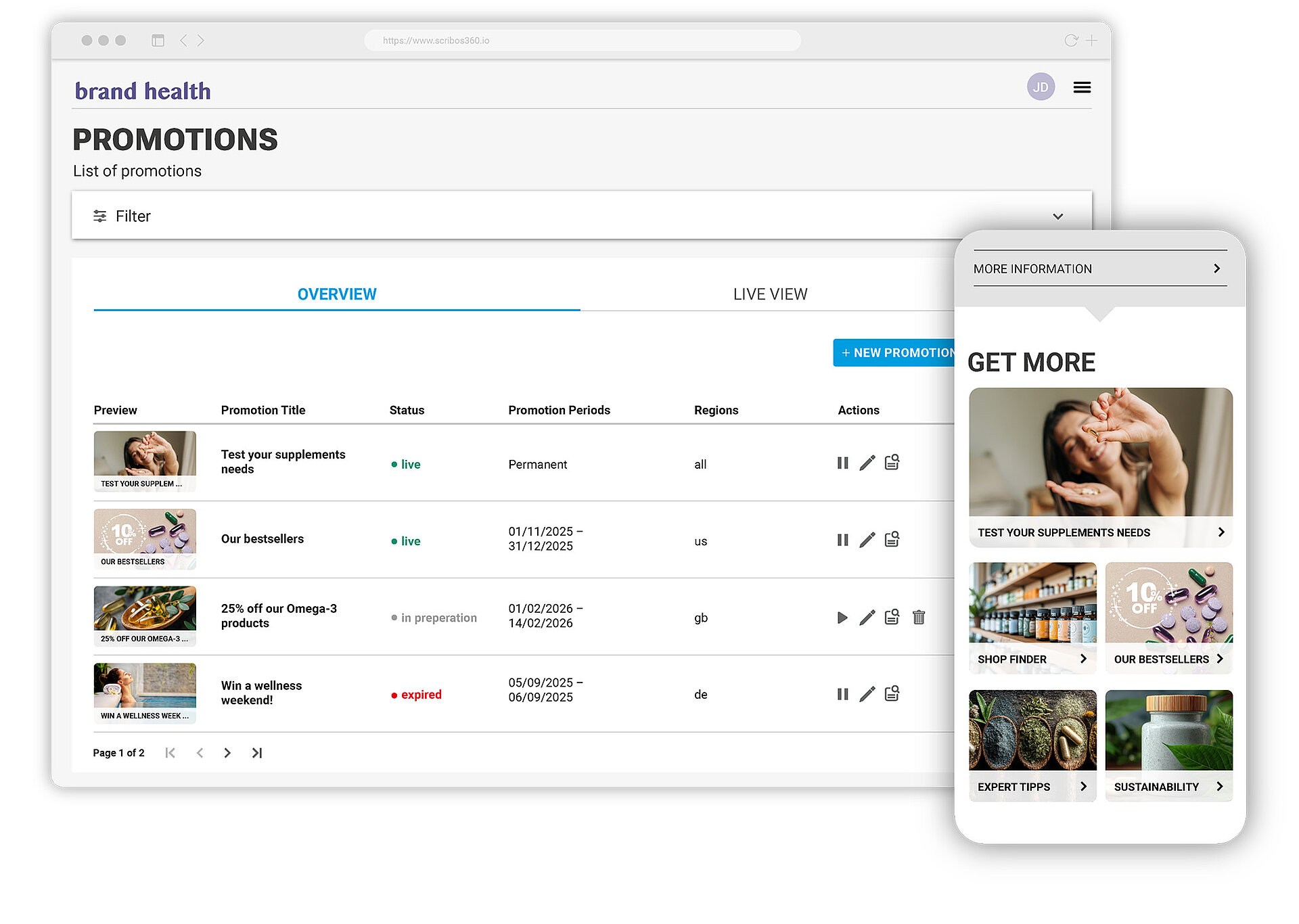
Accompanying communication can additionally support this process. It helps inform relevant user groups about authentication options, increase scan rates, and raise awareness of counterfeiting risks among retail partners, consumers, or internal teams. Communication is especially important in integrated brand protection programs because technical protection measures only deliver their full value when they are understood in the market and actively used.
Through SCRIBOS 360, brands can also provide product-related information, notices, or interaction offers after the scan. The platform therefore supports not only product authentication and analysis, but also Customer Interaction and digital communication at the product level.
The communications agency Karg und Petersen can, where needed, provide targeted support in preparing complex topics related to counterfeiting, product authentication, and brand protection for the relevant audience.
This creates a closed loop: The product scan provides indications. SCRIBOS 360 makes patterns visible. Online Brand Protection, test purchases, and enforcement translate these findings into concrete measures. Communication and Customer Interaction help activate the solution in the market and generate additional relevant feedback.
Practical examples: What integrated brand protection can look like
The following examples show how different industries can use product authentication, digital platform functions, and operational brand protection.
Example 1
ACO / 24H LE MANS – making brand protection visible in licensing environments
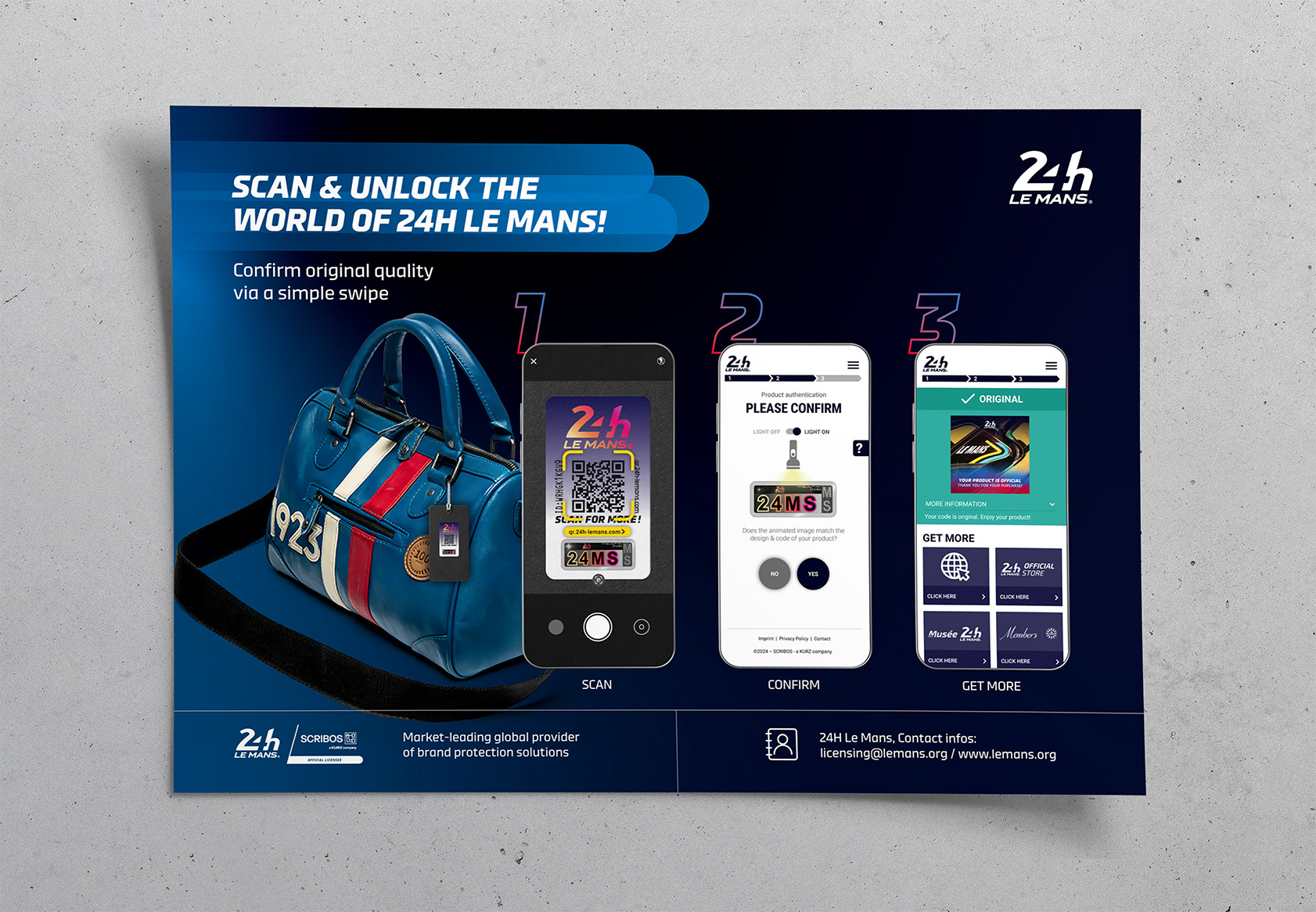
For licensing programs, authenticity is a central trust factor. Fans, retail partners, and licensees must be able to recognize whether a product is officially authorized. At the same time, rights holders need transparency regarding label usage, scan behavior, and possible market risks.
The Automobile Club de l’Ouest, rights holder of the 24H LE MANS brand, uses VeoMark® security labels in combination with SCRIBOS 360. The security label supports authentication of licensed products and can at the same time serve as a digital touchpoint for fan interaction.
The connection between protection and activation is particularly relevant here. When users are actively encouraged to scan, brands generate not only more authentications, but also more data points for analysis. This enables brand owners to better understand where products are scanned, which items are checked most frequently, and whether anomalies occur.
The example shows that brand protection in licensing environments does not need to remain invisible. Communicated properly, a security label can create trust, make official products more recognizable, and at the same time provide valuable market information.
Example 2
Bayer – product authentication in a safety-sensitive market
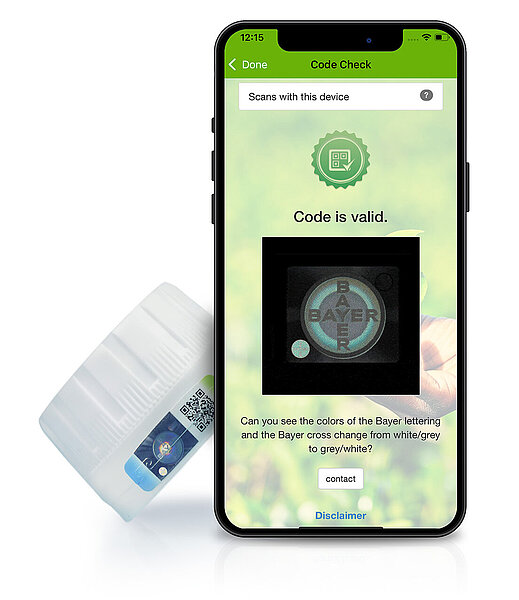
In the agricultural sector, counterfeit products can have significant economic and operational consequences. Crop protection products or seeds must be reliably identifiable because counterfeit or manipulated products can pose risks to harvest yields, users, soil, and supply chains.
Bayer uses the TRUSTSEAL® label and the Bayer Seal Scan App. The label combines a unique QR code with a visual security feature and enables farmers to check product authenticity easily. If anything appears unusual, users can initiate further steps through the app.
By connecting the solution to SCRIBOS 360, aggregated scan data and geodata can be evaluated. This makes it possible to identify risk regions, unusual scan patterns, or recurring anomalies more easily. These insights can support brand protection teams in planning measures more effectively and assessing suspicions in a structured way.
The example shows how physical product security and digital analysis can work together in a sensitive market: Authentication not only protects the individual item but also creates visibility regarding possible counterfeit activity.
Example 3
TotalEnergies Lubricants – scalable authentication for global production networks
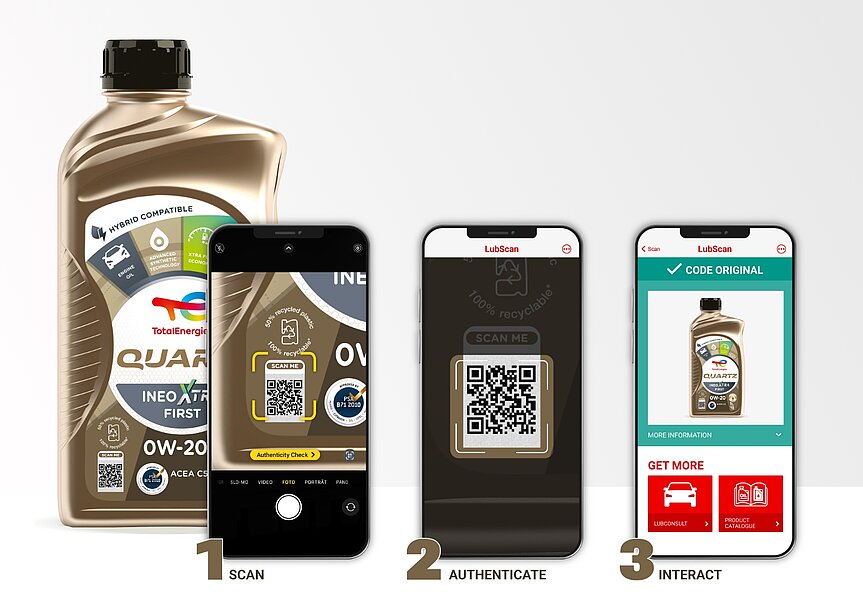
In global production and distribution structures, product authentication must not only be secure, but also scalable and compatible with processes. TotalEnergies Lubricants needed a solution that could be integrated across different markets, print partners, and production environments without unnecessarily complicating existing processes.
The selected solution is ValiGate® Direct Print. The copy-protected, serialized QR code is printed directly onto the packaging or into the existing label design. This allows product authentication to be integrated scalably into existing printing processes without adding separate labels. For users, verification remains simple: They can authenticate the product via smartphone without installing a separate app.
The scan data flows into a customized SCRIBOS 360 environment. There, authentications can be evaluated, suspicious patterns made visible, and digital content provided after the scan. For TotalEnergies Lubricants, this creates a solution that combines product protection, market visibility, and digital customer interaction in one scalable system.
The example shows why integrated brand protection does not necessarily have to create additional complexity in production. When security features can be embedded directly into existing printing and packaging processes, protection, scalability, and ease of use can be combined more effectively.
The value lies in the connected system
Many companies still treat physical product security, digital authentication, online monitoring, and enforcement as separate areas. Yet that is exactly where a major risk lies. A security label without data analysis often remains limited to the individual authenticity check. Online monitoring without product reference may detect suspicious offers but cannot always reliably connect them to specific physical products. Legal action without structured documentation can become unnecessarily time-consuming.
Integrated brand protection connects these levels. Product marking creates the authentication basis. SCRIBOS 360 makes scan data, user feedback, and suspicious patterns visible. Online Brand Protection translates relevant indications into investigations, test purchases, takedowns, or further measures. Communication ensures that user groups understand the solution and actively use it.
This creates a brand protection system that helps brand owners:
- Detect counterfeits and suspicious activities earlier
- Better understand gray market and distribution patterns
- Prioritize measures based on data
- Involve internal and external stakeholders more effectively
- And strengthen trust in original products
The real value therefore does not come only from preventing individual incidents. It comes from transparency, operational capability, and the connection between product protection, market intelligence, and implementation.
Conclusion: Brand protection must be considered from product to measure
Counterfeiting continues to develop across channels, markets, and technologies. Brand owners therefore need protection strategies that do not stop at a single security feature or an isolated online search.
A modern approach starts at the product, combines physical or printed security features with digital authentication, and uses the resulting data for analysis and follow-up measures. SCRIBOS 360 plays a central role in this, because the platform brings together product authentication, scan data, market intelligence, and digital interaction.
KURZ SCRIBOS helps companies develop brand protection solutions that fit the specific product, risk, market, and operational objective. Depending on the requirement, Security Labels, Security Seals, ValiGate® Direct Print, hybrid security solutions, SCRIBOS 360, and Online Brand Protection Services can be combined.
That turns the product scan into more than an authenticity check. It becomes the starting point for a connected brand protection strategy that makes risks visible, supports decisions, and enables targeted action. here...
FAQ – Frequently Asked Questions
What is an integrated brand protection system?
Integrated brand protection combines physical product security, digital authentication, data analysis, and operational follow-up measures. This can include security labels, QR-based authentication, SCRIBOS 360, Online Brand Protection, test purchases, takedowns, and communication measures. The goal is a system that does not just identify counterfeits but makes risks visible and supports targeted action.
Why does anti-counterfeiting start with the product?
Because the product provides the most reliable authentication basis. Without a security feature on the product or packaging, it is more difficult to distinguish genuine products from counterfeits with confidence. Digital or hybrid security solutions can additionally generate scan data that can be used for analysis and brand protection.
What information does a product scan provide to brand owners?
Depending on the solution and configuration, a product scan can provide data points related to product verification, such as time, scan context, or geographic patterns. When aggregated, this information can help identify counterfeit hotspots, unusual scan patterns, gray market activity, or unauthorized distribution channels. Depending on the solution, additional functions for traceability or volume control may also be added.
What role does SCRIBOS 360 play?
SCRIBOS 360 is the digital platform behind many KURZ SCRIBOS solutions. It enables product authentication, scan data analysis, hotspot detection, Gray Market Monitoring, B2B Ordering, Customer Interaction, and reporting. This turns individual product scans into actionable information for brand protection teams.
Why is online monitoring alone not enough?
Online monitoring can make suspicious offers visible, but it does not automatically confirm whether a specific physical product is genuine or counterfeit. An integrated strategy connects online indications with product authentication, test purchases, and documented follow-up processes. This allows suspicious cases to be assessed in a more structured way and counter-measures to be initiated more effectively.