Brand Protection with GS1 and the Digital Product Passport in Mind
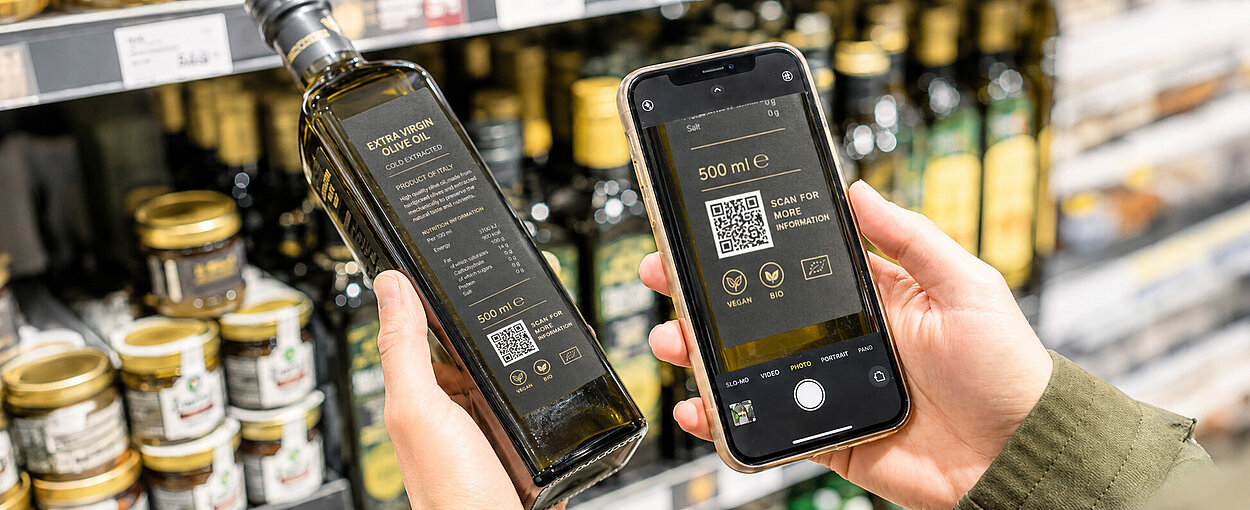
For brands that want to protect their products against counterfeiting, tampering, or unauthorized distribution channels, this raises an important question:
How can effective brand protection be implemented today without creating obstacles for future requirements such as GS1 compliance or DPP readiness?
This is exactly where modern product labeling comes into play. A strong solution does not only protect the product itself. It also remains compatible with existing and future standards, systems, and regulatory requirements.
KURZ SCRIBOS helps companies plan brand protection solutions that fit the specific product, packaging, and risk profile, while remaining open to developments such as GS1 and the Digital Product Passport.
The key point is this: Companies do not have to put anti-counterfeiting projects on hold until every detail around GS1 or the DPP has been finalized. They can implement a solution today that protects their products and remains future-ready.
Why Product Labeling Is Becoming More Complex
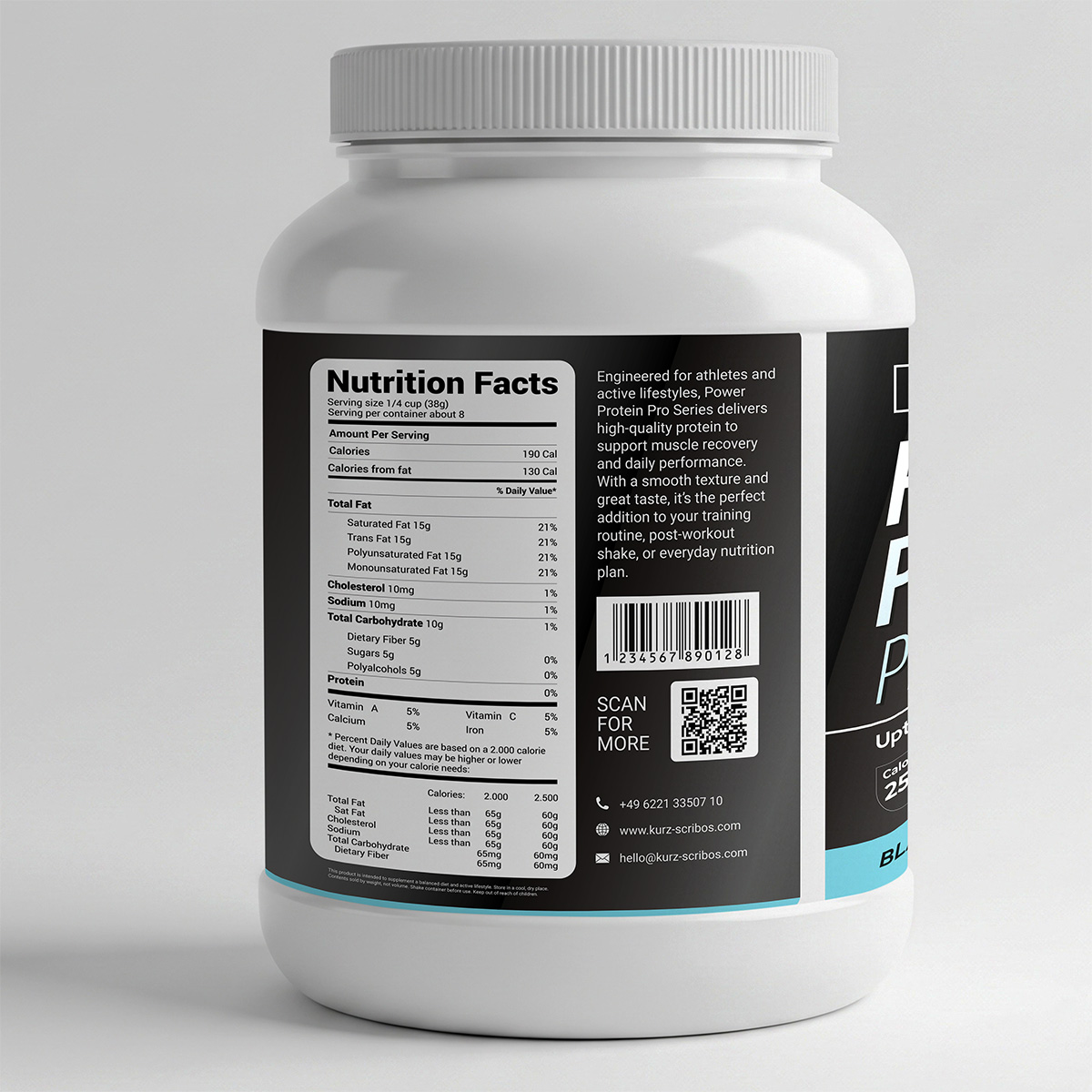
Packaging has long been responsible for more than information and design. It carries retail barcodes, legally required information, marketing elements, QR codes for consumer communication, and, in some cases, security features to protect against counterfeiting or tampering.
New developments are adding further requirements. The Digital Product Passport is intended to make product-related information digitally available. GS1 Sunrise 2027 is driving the use of 2D codes in retail. At the same time, many brands have a growing need for traceability, product authentication, and control over distribution channels.
As a result, companies not only need to decide which information they want to provide. They also need to determine which data carrier belongs on the product, which systems are connected behind it, and how flexible the solution will remain for future requirements.
What Is the Digital Product Passport?
The Digital Product Passport is a regulatory initiative by the European Union. It is legally anchored in the Ecodesign for Sustainable Products Regulation, or ESPR.
The purpose of the DPP is to make product-related information digitally available. The exact information required will depend on the relevant product group and the specific product-related requirements.
The DPP is not a single PDF and not simply a link to a website. It is a structured, machine-readable data set that makes information about a product digitally available. Depending on the product group, this may include information on materials and composition, origin, sustainability, repairability, maintenance, spare parts, or recycling.
Importantly, the DPP does not generally require a QR code. What is required is a machine-readable data carrier that connects the physical product with its digital representation. In practice, QR codes may play an important role because they are cost-effective, space-saving, and easy to use with smartphones. Depending on the product group and application, other data carriers such as NFC may also be relevant.
For companies, this means the DPP should not be treated as an isolated digital project. It affects data, processes, responsibilities, systems, and the question of how product information can be kept up to date and made accessible over the long term.
Why Companies Should Already Consider the DPP Today
So far, the Digital Product Passport has only been specifically defined for selected product groups. For batteries, there is already a very concrete timeline. For further product groups, such as textiles, implementation is gradually becoming more concrete. Other areas are expected to follow through the ESPR work programs and later delegated acts.
This does not mean that every company needs to implement a full DPP immediately. However, many companies should already be asking whether their product labeling and data structures are prepared for it.
If a company introduces a solution today for anti-counterfeiting, traceability, or digital product information, that solution should not conflict with future DPP requirements. It should remain expandable.
That is where the opportunity lies: Companies that build flexible, structured, and digital product labeling today create a foundation that can later also be used for DPP-relevant information.
What Is GS1?
GS1 develops standards for the unique identification of products, companies, locations, and logistics units. In retail, GS1 is best known for the traditional linear barcode, such as the EAN code.
This barcode usually contains a GTIN, meaning a product identification number. The checkout system reads this information and uses it to identify the product. The price is normally not stored in the code itself but retrieved from retail or checkout systems.
GS1 Sunrise 2027 is changing this environment. The goal is not for traditional barcodes to disappear overnight. Rather, the aim is for retail checkout systems to be able to read and process 2D codes with GS1 standards by the end of 2027, alongside existing linear barcodes.
2D codes can contain or provide access to more information than traditional 1D barcodes. This can include batch numbers, best-before dates, serial numbers, or links to digital information.
For companies, GS1 is therefore not only relevant as a standardization topic. It can also become a possible building block when product identification, retail processes, and digital information are considered together.
What Role Does the GS1 Digital Link Play?
In the GS1 context, the GS1 Digital Link plays a particularly important role because it converts product identifiers such as the GTIN into web-enabled URLs. This web address can, for example, be encoded in a QR code.
The advantage is that the code can remain usable for GS1-based processes while also functioning like a web link. Retail systems can read relevant GS1 data, while consumers can access digital information with their smartphones.
It is important to make a clear distinction here: GS1 Digital Link is not automatically the standard for the Digital Product Passport, nor is it the only possible technical implementation. However, it may become relevant for many consumer goods applications because it combines product identification and web access in one data carrier.
For brands, this means that if new codes on packaging are already being considered, it is worth checking whether GS1 Digital Link is a suitable option. However, not every use case requires the same solution, and not every packaging concept needs to bundle all functions into a single code.
What Do the DPP, GS1, and Anti-Counterfeiting Have to Do with Each Other?
The DPP and GS1 have different starting points. The DPP comes from European regulation and aims to make product-related information digitally available. GS1 comes from retail, logistics, and supply chains and supports standardized product identification.
Both topics are leading companies to take a closer look at product labeling, data carriers, and digital information on packaging. At that point, another question becomes relevant: What requirements does the product already have today?
For many brands, it is not only about providing product information or supporting retail processes. They also need to ensure that products can be verified as genuine, that tampering can be detected, and that unauthorized distribution channels become visible.
This is where anti-counterfeiting comes in. Even though the DPP, GS1, and brand protection pursue different goals, they meet at the same point in implementation: The physical product, the packaging, and the digital verification layer behind it.
Anti-counterfeiting does not have to wait for a comprehensive labeling concept. What matters is designing the solution from the beginning so that it remains compatible with future standards.
Why the Use Case Matters
How these topics are brought together on the product depends on the specific use case. There is no one-size-fits-all solution for every product, packaging type, and risk profile.
The first question is therefore not how many codes or labels are needed, but what task needs to be solved. Should the product simply provide digital information? Does it need to be identified in retail? Should it be traceable? Or does it also need protection against counterfeiting, tampering, or unauthorized distribution channels?
If a company only wants to provide digital product information, a static QR code may be sufficient. But when it comes to anti-counterfeiting, tamper protection, traceability, or distribution control, unique identification at item level is required, supported by suitable security features and a platform for authentication and analysis.
Depending on the product, packaging, and risk, the solution can look different. Sometimes it makes sense to continue using existing codes and add a security feature. In other cases, several functions can be bundled more closely in one central code or security element. What matters is that the solution fits the specific product and the existing packaging.
The right solution therefore starts with the specific use case: Which function needs to be represented where on the product, how is it technically supported, and how does it remain compatible with possible GS1 or DPP requirements?
Why Anti-Counterfeiting Should Not Wait
Many companies are currently monitoring developments around the DPP and GS1, but do not yet know exactly which requirements will apply to them and when. This can lead to projects being put on hold because companies do not want to make the wrong decision.
For anti-counterfeiting, this is risky.
If a company is already dealing with counterfeits, tampering, gray market activities, or a lack of traceability, it should not postpone solving that problem simply because the details around the DPP or GS1 have not yet been fully clarified.
A well-planned anti-counterfeiting solution can be implemented today and designed in a way that takes future developments into account. It protects products, makes originality verifiable, and can later be connected with additional digital requirements.
This is the strength of a flexible approach: Companies solve a concrete problem today while remaining compatible with the requirements of tomorrow.
In other words, GS1 compliance and DPP readiness should not slow down brand protection projects. Instead, they should be treated as requirements that can be integrated into a future-ready concept.
And This Is Where KURZ SCRIBOS Comes In
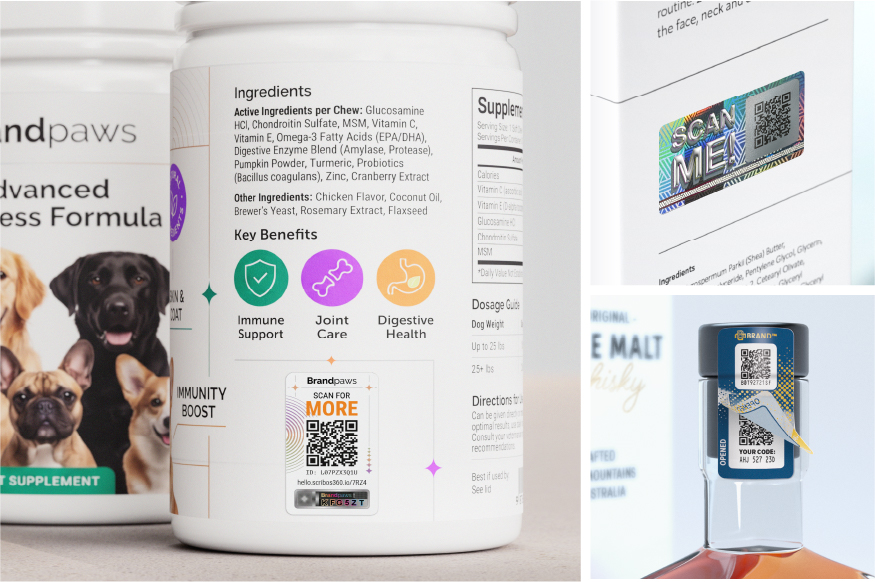
KURZ SCRIBOS supports companies in protecting their products against counterfeiting, tampering, or unauthorized distribution channels while also taking digital future topics such as GS1 and the DPP into account.
KURZ SCRIBOS develops brand protection solutions that bring together product protection, physical security features, digital authentication, and future readiness. The goal is a solution that protects products today and can remain compatible with GS1 or DPP requirements tomorrow.
It starts with the question of which risk needs to be addressed: Is the goal to verify originality, protect against tampering, enable traceability, support distribution control, or analyze scan data? Based on this, KURZ SCRIBOS develops a concept that fits the product, the packaging, and existing or planned labeling systems.
Depending on the use case, the solution can include security labels, seals, or void labels that make first opening visible and make tampering more difficult. Serialized elements can also be used to make individual products uniquely identifiable. Through digital authentication and scan analysis, brands can check whether a product is genuine, identify suspicious scan patterns, and gain indications of counterfeits, gray market activity, or unauthorized distribution channels.
Importantly, these solutions can be planned so that they remain compatible with existing or future GS1 and DPP concepts. If a company already uses a GS1 code or a DPP access point, it can be assessed how a KURZ SCRIBOS solution can build on it or complement it. If a company first introduces an anti-counterfeiting solution, that solution can be designed so that later GS1 or DPP requirements are not blocked.
KURZ SCRIBOS also supports companies with consulting to bring product protection, packaging, existing labeling systems, and future requirements together in a meaningful way.
How SCRIBOS 360 Supports the Solution
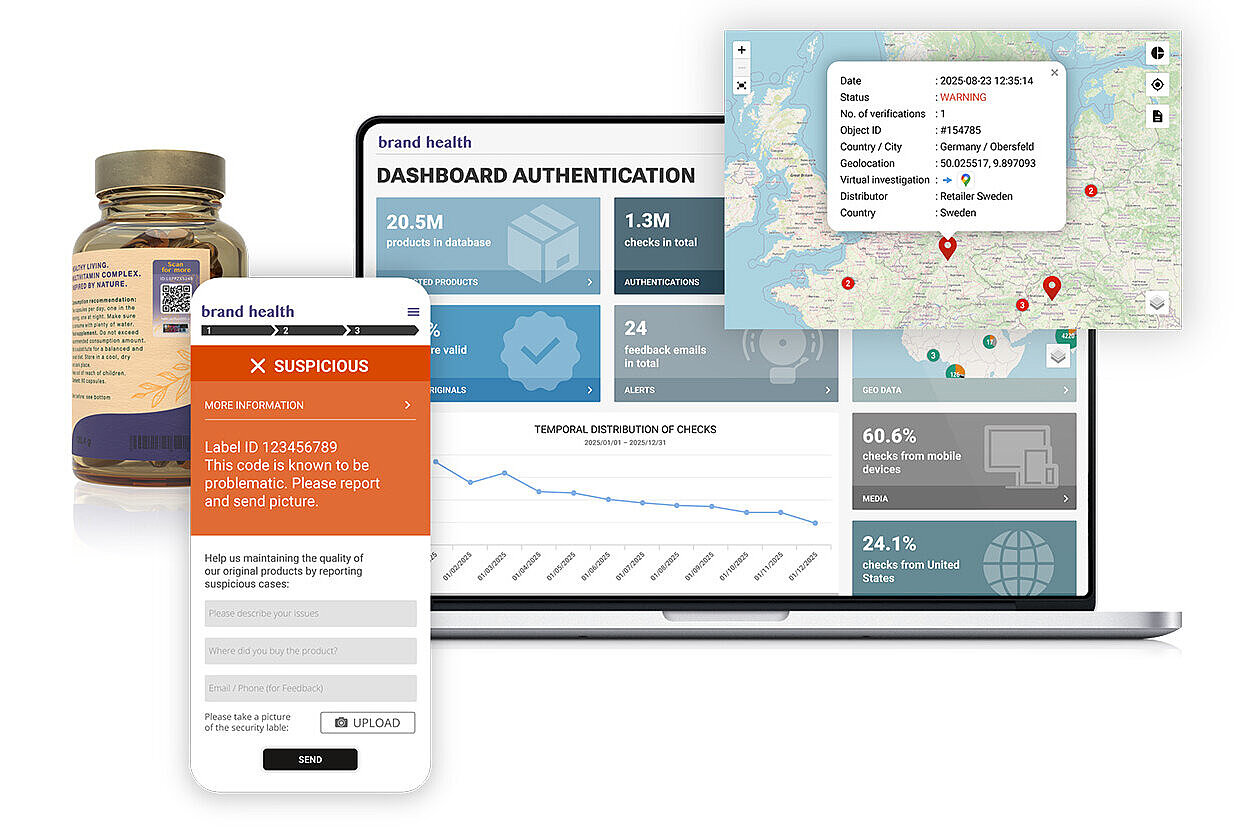
SCRIBOS 360 is the digital platform behind KURZ SCRIBOS solutions. It makes a physical security feature digitally usable: Products can be authenticated, scans can be analyzed, and relevant content can be displayed after the scan.
For brands, this means they can check whether a product is genuine, identify suspicious scan patterns, and gain indications of possible counterfeits, tampering, or unauthorized distribution channels.
After originality has been verified, additional information can be integrated. For example, the scan can not only confirm that a product is genuine, but also display product-related data such as origin, material information, sustainability data, or content for the Digital Product Passport.
This means SCRIBOS 360 adds a digital layer to physical product protection. At the same time, the solution can be planned in a way that takes existing or future requirements around GS1 and the DPP into account.
The focus remains clear: Implement anti-counterfeiting today while staying compatible with future requirements.
Why Companies Should Plan Now
Companies should not rush into action. But they should review their product labeling strategy.
DPP, GS1, traceability, and brand protection are not developing in isolation. They affect the same packaging, the same data carrier, and often the same data and process questions.
Companies planning an anti-counterfeiting solution today should therefore ask themselves:
- Does the product need physical protection against tampering?
- Does originality need to be digitally verifiable?
- Does the product need serialization?
- Are traceability or distribution control relevant?
- Are there already GS1 codes or plans for GS1 Digital Link?
- Does the product need to provide DPP-relevant information in the future?
- Which systems provide the required data?
- Should an existing code be used, extended, or complemented with a security label?
These questions help avoid isolated solutions. They ensure that today’s anti-counterfeiting projects remain compatible with future requirements.
Additional Information on the Digital Product Passport
If a company's primary focus is not brand protection, product authentication, or tamper protection, but rather the structured provision of product data for the Digital Product Passport, a dedicated DPP platform may be the right choice. Our sister company, KURZ Digital, offers a standalone solution for DPP applications with Digital ProductPass PLUS. For more information, please visit the KURZ Digital website.
Conclusion
GS1 and the Digital Product Passport are important developments. For many companies, however, the concrete need for action arises elsewhere: Protection against counterfeiting, tampering, gray market activities, or a lack of traceability.
This is exactly where KURZ SCRIBOS comes in.
A modern brand protection solution should protect products today while remaining open to future requirements. This means that physical product protection, digital authentication, traceability, and data analysis must be planned in a way that allows them to remain compatible with existing or future GS1 and DPP concepts. KURZ SCRIBOS helps companies bring together product protection, packaging, digital verification, and future requirements in a meaningful way. The result is a solution that provides effective anti-counterfeiting today and remains compatible with GS1 compliance and DPP readiness tomorrow.
FAQ – DPP, GS1, and Modern Brand Protection
Do I need to change my packaging because of the Digital Product Passport?
Not necessarily. The Digital Product Passport is being introduced gradually and is not yet specifically mandatory for all product groups. However, companies should review early whether their product data, labeling, and packaging are prepared for future requirements.
Can I continue using my existing QR code?
That depends on the use case. If the QR code only links to general information, it may still be usable. If authentication, traceability, brand protection, or DPP-relevant information also need to be included, it should be checked whether the existing code and the systems behind it are suitable.
What happens if I already have a GS1 code on the packaging?
An existing GS1 code can remain part of the labeling concept, depending on the application. The important thing is to check whether and how brand protection, digital authentication, or DPP-relevant information can be added in a meaningful way without disrupting existing retail processes.
Do I need several codes for DPP, GS1, and brand protection?
Not necessarily. Sometimes one central code can support several tasks. In other cases, a combination of an existing code, a security label, and a digital platform is more appropriate. The decisive factor is the specific use case: What should the code do, what risk needs to be addressed, and which systems are already in place?
Is a simple QR code enough for the Digital Product Passport?
For simple digital product information, a QR code can be a useful access point. However, the Digital Product Passport requires structured digital product data and a machine-readable data carrier. If authentication, access control, or data updates are also required, a simple static QR code is usually not enough.
Is a simple QR code enough for brand protection?
Usually not. A simple QR code can be copied and, on its own, does not provide sufficient protection against counterfeiting or tampering. Effective brand protection often requires physical security features, unique identification, digital authentication, and scan analysis.v
Can a security label also display digital product information?
Yes. A security label can be connected to a digital layer. After the scan, the authenticity of the product can first be checked. Additional information can then be displayed, such as origin data, material information, sustainability information, or content for the Digital Product Passport.
Can I introduce anti-counterfeiting even though DPP and GS1 have not yet been finalized?
Yes. Companies do not need to postpone anti-counterfeiting until every detail around the DPP or GS1 has been finalized. What matters is planning the solution so that it does not block later requirements and remains compatible with existing or future labeling concepts.
What does DPP-ready mean for a brand protection solution?
DPP-ready means that a brand protection solution is planned in a way that allows DPP-relevant information to be integrated or made accessible later. It does not mean that a full Digital Product Passport has to be implemented immediately.
What does GS1-compliant mean for a brand protection solution?
GS1-compliant means that the brand protection solution takes existing or future GS1 standards and retail processes into account. The goal is to ensure that product protection and retail requirements do not conflict with each other.
Can a brand protection solution be combined with GS1 Digital Link?
Yes. Depending on the use case, GS1 Digital Link can be part of a labeling concept. It must be assessed how GS1 identification, product protection, digital authentication, and possible DPP information can work together meaningfully.
Which is better: One central code or an additional security label?
That depends on the product, the packaging, and the risk. If the goal is only to provide information, a code may be sufficient. If tamper protection, first-opening protection, or anti-counterfeiting is important, a security label may be useful or necessary.
How does KURZ SCRIBOS help if we already use QR codes or GS1 codes?
KURZ SCRIBOS checks how a brand protection solution can be combined with existing codes or labeling systems. Depending on the use case, the solution can build on existing codes, complement them, or be implemented as a separate security element.
How does KURZ SCRIBOS help with DPP readiness?
KURZ SCRIBOS supports companies in planning brand protection solutions that remain open to future DPP requirements. After product authentication, additional product information or DPP-relevant content can, for example, be made accessible.
What role does SCRIBOS 360 play?
SCRIBOS 360 is the digital platform behind KURZ SCRIBOS solutions. It enables product authentication, scan analysis, and the display of relevant content after the scan. This allows physical product protection to be connected with digital information and future requirements.
When should I contact KURZ SCRIBOS?
If products need to be protected against counterfeiting, tampering, or unauthorized distribution channels while topics such as GS1, DPP, traceability, or digital product information also need to be considered. KURZ SCRIBOS helps develop a solution that fits the product, the packaging, and future requirements.