From digital print to digital identity: How the FLOW Smart Pouch connects packaging, authentication, and consumer interaction
How digital printing enables pouch-level individualization
Flexible packaging has traditionally been produced around a defined design and a defined production quantity. Every pouch within that production run carries the same artwork and information.
Digital printing changes this approach. Instead of creating a fixed printing plate or cylinder for every design, the artwork is transferred directly from a digital file to the printing press. This allows packaging content to be changed from one print job to the next.
For brands, this creates new flexibility. Multiple SKUs, shorter runs, customized packaging and faster responses to market requirements become easier to manage without creating a completely new conventional printing setup for every variation. This is particularly relevant as brands increasingly seek to reduce inventory and order smaller quantities more frequently. Digital printing can make short, just-in-time production economically viable because small quantities can be produced without the lengthy setup, cleaning, color changes and plate changes required for conventional printing.
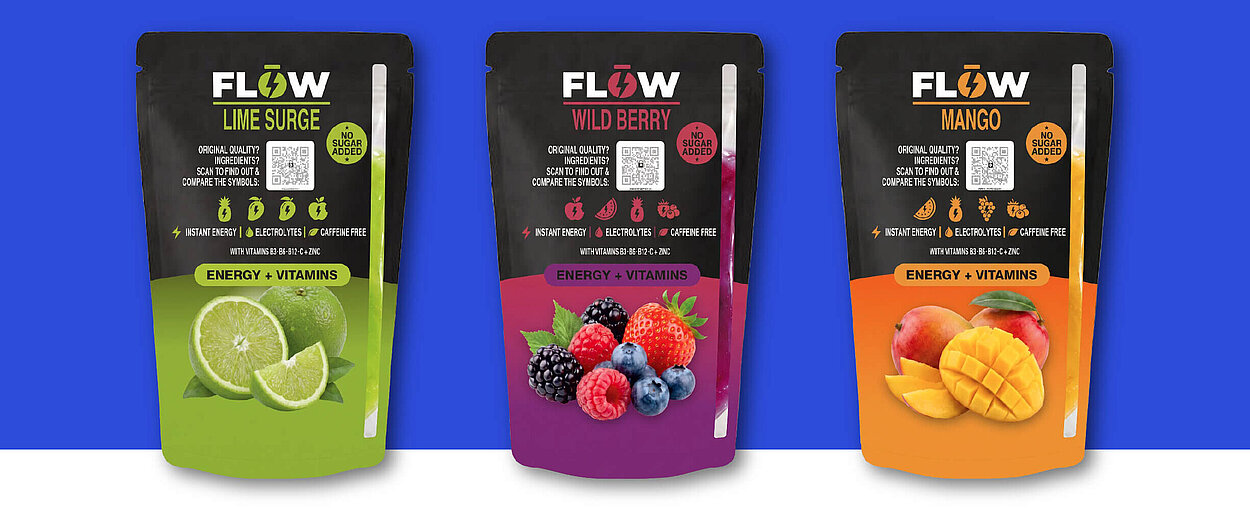
The FLOW Smart Pouch provides a practical example. The project features three different pouch designs — Lime Surge, Wild Berry, and Mango — digitally printed on an HP Indigo press and then converted into food-safe mono-material stand-up pouches with soft-touch lamination.
The different designs already show the flexibility of digital printing. But the same technology can do more. It can add variable elements to individual pouches within a single production run. This means that not every pouch has to carry exactly the same information. Each package can be given its own unique elements while the underlying production process remains the same.
This is where digital printing becomes the foundation for giving each pouch its own identity.
Giving each pouch a secure identity
This is where the FLOW concept connects HP Indigo digital printing with KURZ SCRIBOS authentication technology.
The same digital print workflow that enables different pouch designs and variable elements can also be used to individualize each package. In the FLOW Smart Pouch, every pouch receives a unique, serialized QR code with KURZ SCRIBOS ValiGate® copy protection.
ValiGate® combines the serialized QR code with a hidden copy-protection structure and is printed directly onto the package using the HP Indigo process. Additional HP Indigo capabilities, such as microtext or invisible UV ink, can also support the overall security concept.
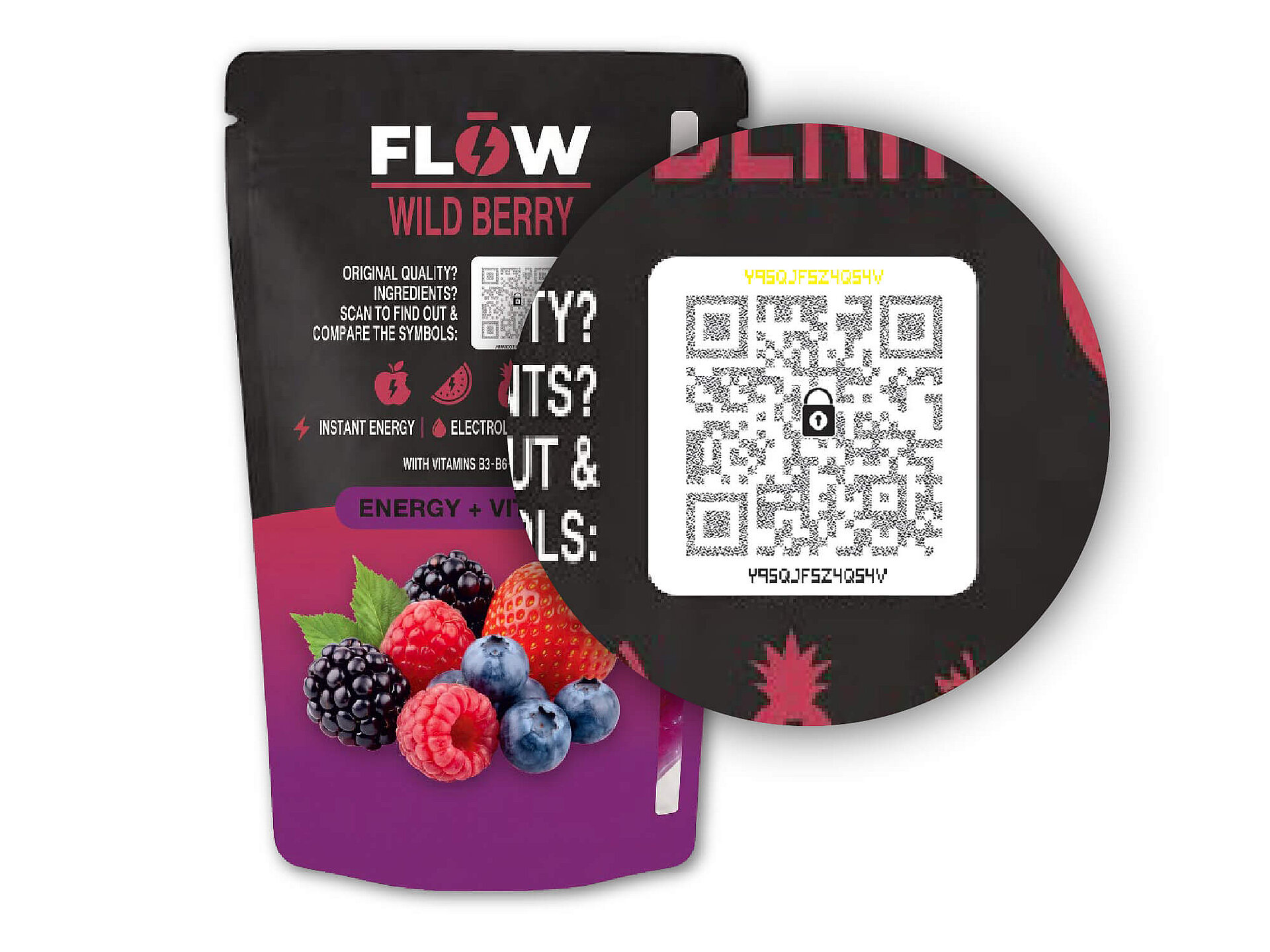
The security element is therefore not simply added to the package as a separate post-production step. It becomes part of the digital printing process itself. Each pouch receives security information that is unique to that individual package.
Digital printing provides the foundation for package-level individualization. KURZ SCRIBOS builds on that foundation by turning the individualized package into a secure, verifiable product identity.
How consumers verify the pouch
Once a pouch has its own digital identity, consumers can check whether the physical package in their hand matches that identity.
The process is designed to be simple. Consumers do not need a dedicated app or a special QR-code reader. They scan the QR code with the camera on a standard smartphone and start the authentication process.
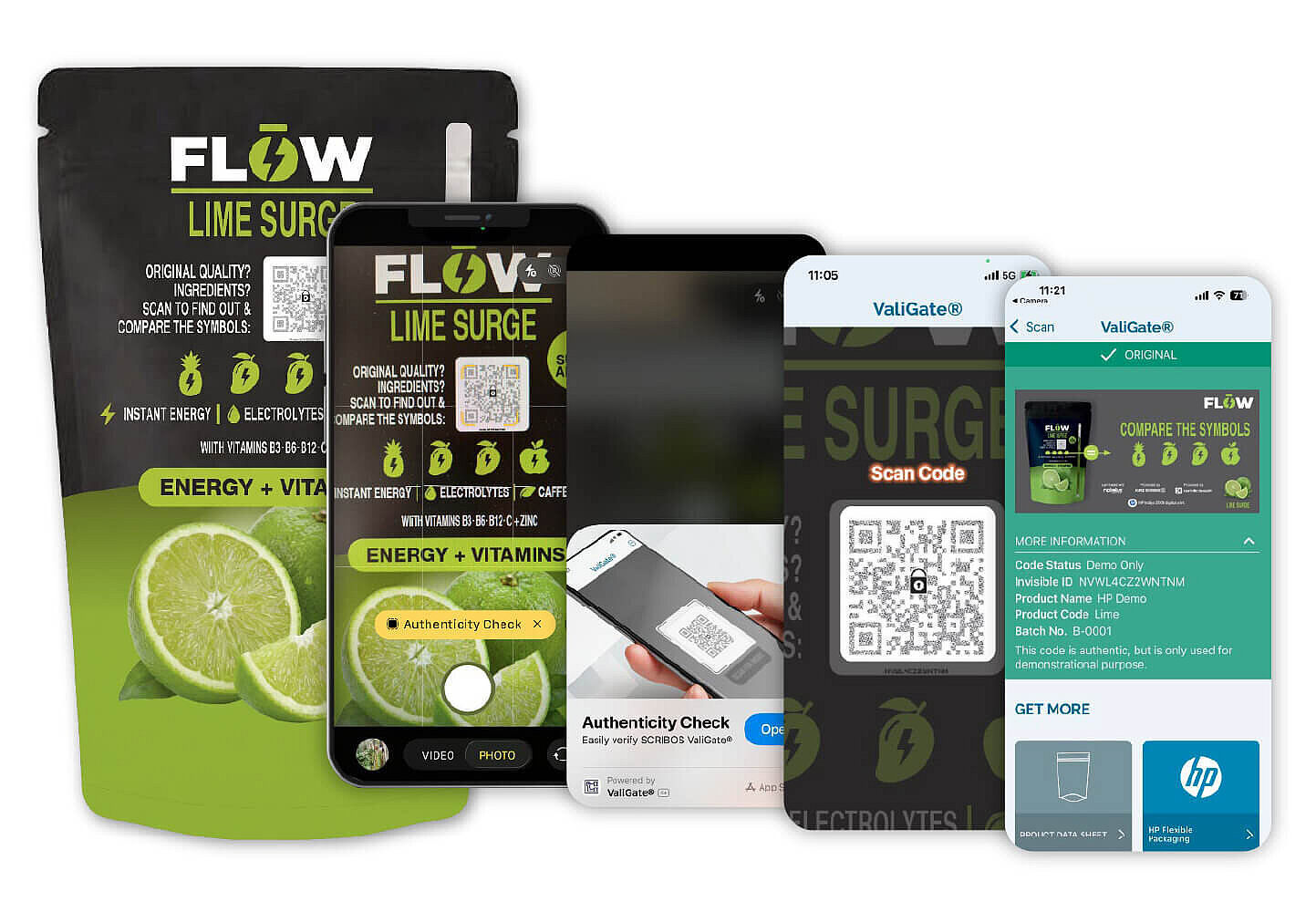
However, the QR code is only the first step.
Because digital printing allows pouch content to vary within the same production run, each FLOW pouch carries its own combination of four fruit symbols. These symbols are printed directly on the pouch and differ from one individual package to another. After the QR code has been scanned, the exact symbol combination assigned to that pouch appears on the consumer’s phone.
The consumer then compares the symbols shown on the screen with the symbols printed on the physical pouch.
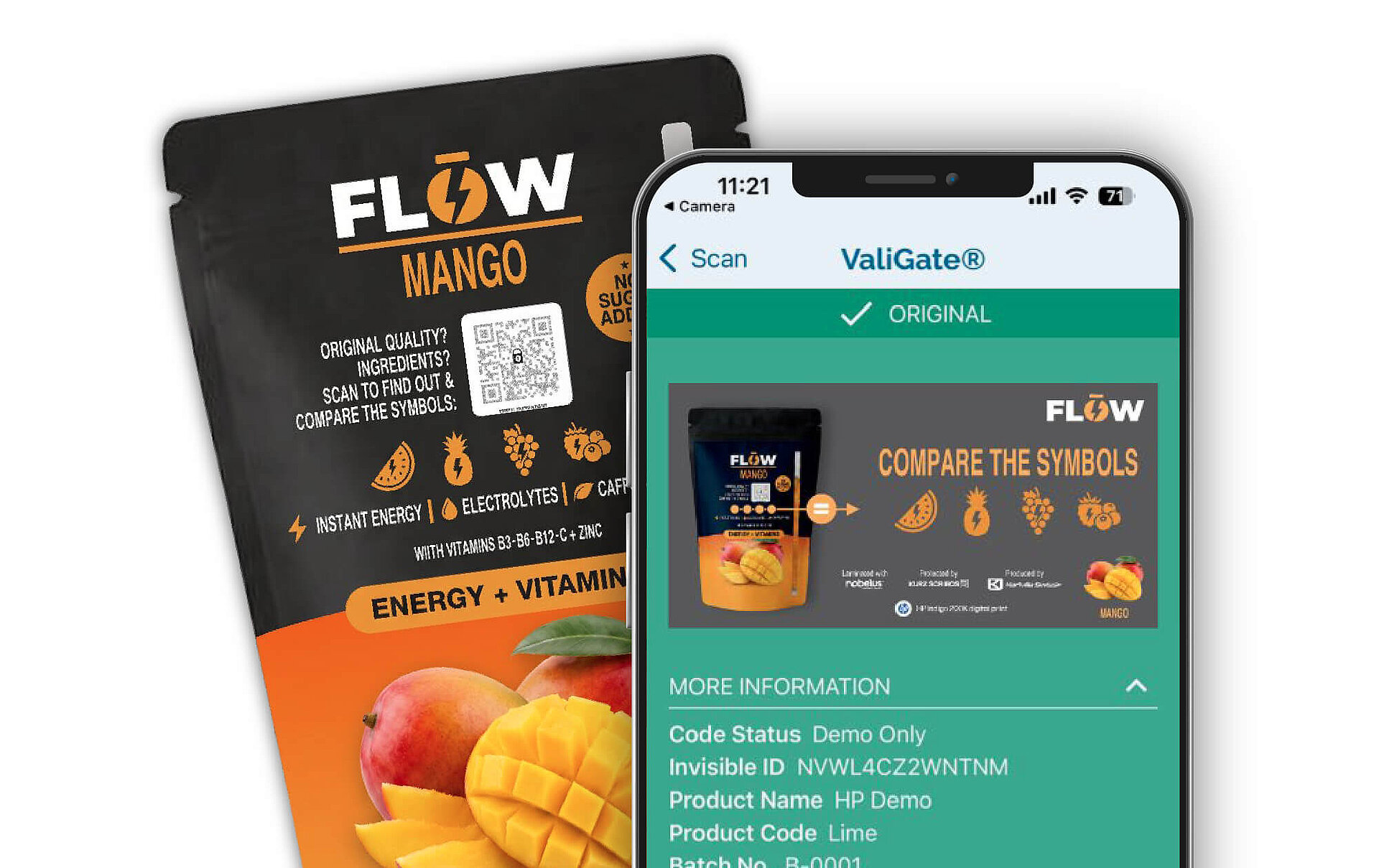
If the combinations match, the physical package matches the digital identity retrieved through the QR code.
This creates a physical-digital cross-check. Consumers verify that the pouch they are holding matches its digital identity, while the variable fruit symbols add a light element of gamification to the authentication process. Instead of simply scanning a code, the consumer actively compares the pouch with the digital result and confirms the match in a simple, visual way.
Turning authentication into consumer interaction
Authentication creates a trusted connection between the physical package and the digital information linked to it. Once the pouch has been verified, the scan can become the entry point to further product-related content.
Consumers can be directed to information such as product details, data sheets, sustainability and recycling guidance or Digital Product Passport content. Depending on the implementation, the code can also be designed to support GS1 standards, helping brands connect authentication with standardized product identification and digital product information.
The same interaction can also lead to the brand’s website, online shop or social media channels. For brands that want to extend the experience further, it can support loyalty mechanisms, bonus points, sweepstakes or other digital services linked to the authenticated product.
The pouch therefore becomes more than a physical container with a security feature. Its individual identity creates a digital touchpoint that remains connected to the consumer journey. Consumers receive relevant information at the moment they have the product in front of them, while brands create a direct digital connection with the person interacting with the package.
Because this interaction is linked to one specific pouch, it can also provide insights that go beyond the individual consumer experience.
How product authentication creates valuable market insights
When consumers interact with individually identified packages, each scan can become a useful data point. In the FLOW concept, the consumer experience is connected to the SCRIBOS 360 Cloud backend. Depending on the application, each scan can generate information such as the date, time, location context, and authentication result.
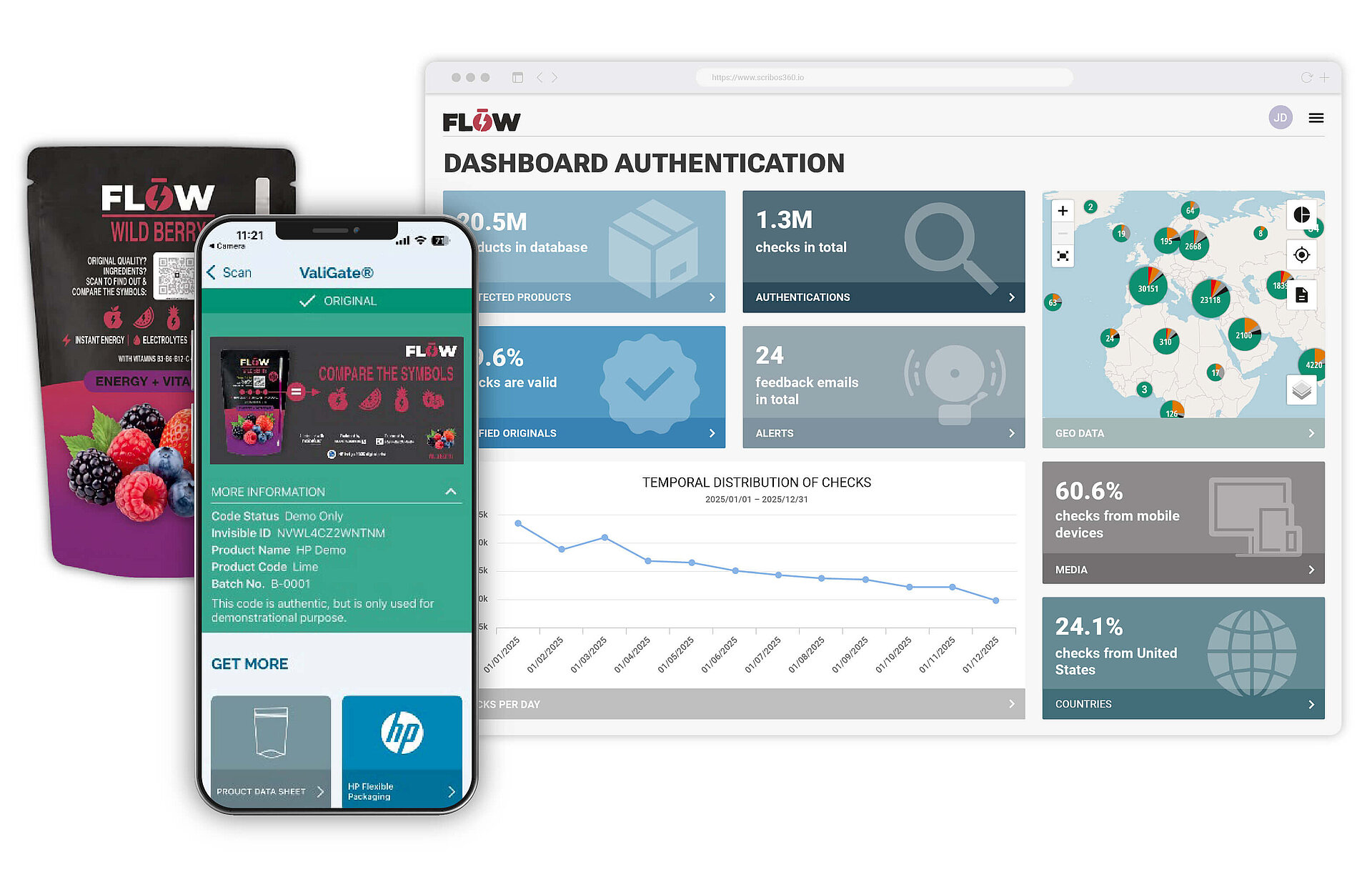
A single scan shows one interaction. Across many packages and interactions, however, scan activity can reveal broader patterns. Brand experts can use this information to identify potential counterfeit hotspots, support traceability, monitor gray market activity and help with volume control.
This means the individual package identity creates value on two levels. For consumers, it provides a simple way to verify the physical product and access digital content. For brands, it creates visibility into where, when and how authentication is taking place.
KURZ SCRIBOS provides the infrastructure behind this process, including code generation and database management, print-data generation, consumer verification and brand analytics. Printers and converters therefore do not have to build the digital security infrastructure themselves. They can focus on producing the physical packaging, while KURZ SCRIBOS manages the secure product identity and the digital interactions connected to it.
For print shops, this can also create new business opportunities. Digital pouch production combined with secure individualization allows them to support applications that go beyond conventional packaging, including connected packaging, product authentication and smaller-volume orders.
The result is a continuous connection between the physical package, the consumer, and the brand.
Where HP and KURZ SCRIBOS come together
The FLOW Smart Pouch demonstrates how digital printing and product authentication can work together in a flexible packaging application. It combines production flexibility with a secure digital identity that can be verified by consumers and connected to digital services.
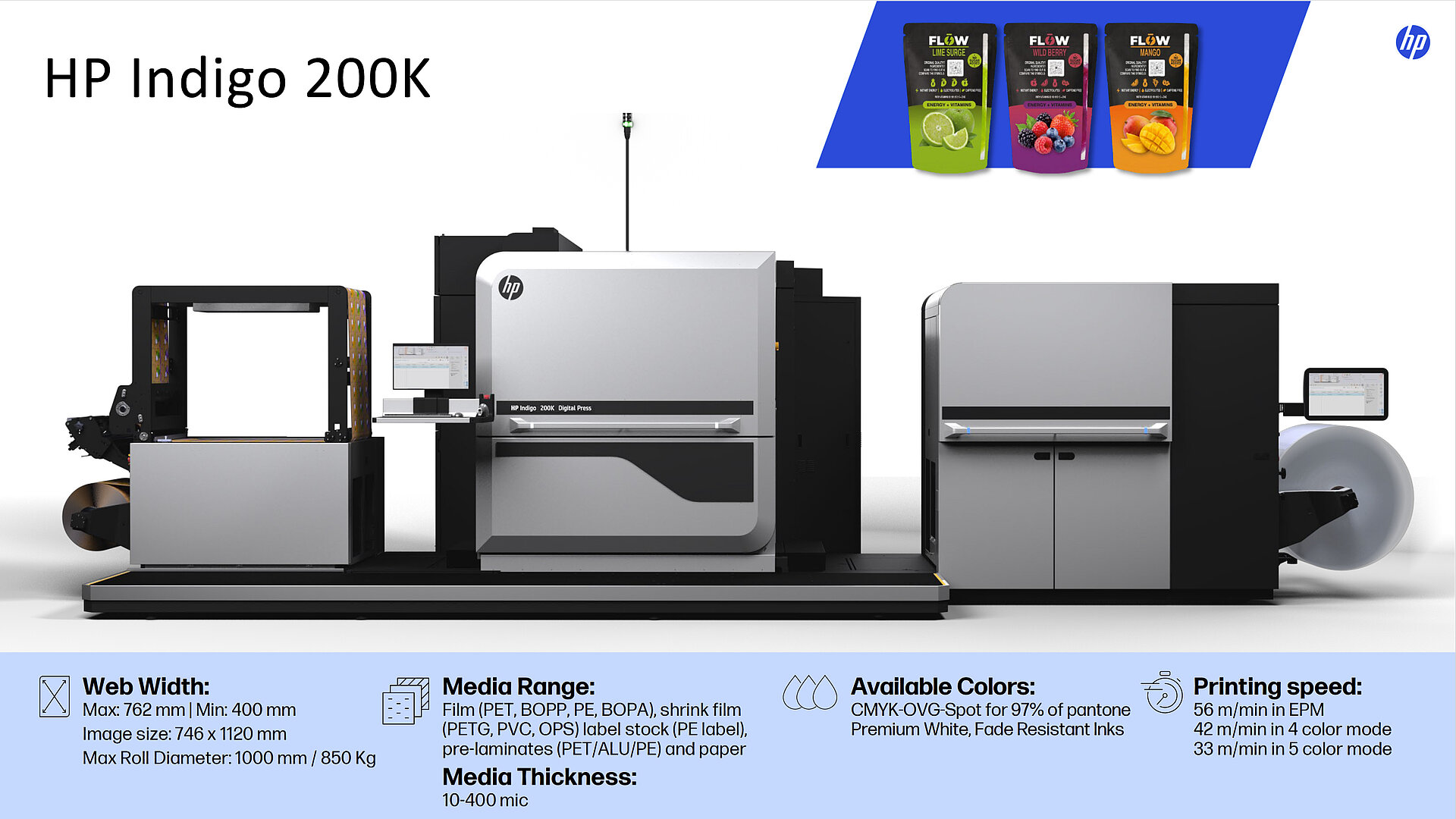
HP provides the digital printing foundation. Its HP Indigo technology enables variable content to be produced within a flexible digital workflow, while the broader HP Digital Pouch Factory concept connects printing with processes such as lamination, coating, slitting, digital embellishment and pouch making.
KURZ SCRIBOS adds the security and digital identity layer. ValiGate® provides the copy-protected, serialized identification. The individualized fruit symbols create the physical-digital cross-check used during authentication, and SCRIBOS 360 provides the backend for code management, consumer verification, and analysis of scan activity.
In the FLOW Smart Pouch, these elements come together in a practical production example. Digital printing individualizes each pouch during production, while KURZ SCRIBOS uses this individualization to create a secure product identity. This allows the pouch to be verified at the point of interaction and connected to product information, consumer interaction, and scan-based insights.
For brands and converters, the project shows how secure digital product identities can be integrated into flexible packaging in practice. Authentication, consumer interaction and data analysis become part of the packaging concept itself, without separating the physical pouch from the digital experience behind it.
In this way, the pouch becomes more than a printed package. It becomes a secure entry point for product verification, digital information and direct consumer interaction.
Interested in connected packaging? KURZ SCRIBOS can support brands in integrating secure digital identity, product authentication, and consumer interaction into their packaging concepts.