Counterfeit products are hitting online trade – digital brand protection solutions can help

Until recently, intercepting containers with counterfeit goods at ports was often seen as a promising brand protection approach. Today, however, enormous quantities of small packages are flooding European markets. This is clearly illustrated by the example of Liège Airport in Belgium: here alone, over a million parcels arrive from China every day, a large portion of which are destined for recipients in nearby Germany. The senders include some often-booming Chinese online shops, such as Temu, Shein, or AliExpress. Asian sellers are flooding European markets with cheap goods — and are often criticized for trading in counterfeit and cheap knock-offs.
The trend of sending counterfeits directly to end consumers in numerous individual shipments of low value also makes systematic controls by authorities more difficult, as current studies indicate. The enormous volume of small shipments poses a challenge to the control capabilities of the authorities. While it used to be possible to intercept containers with thousands of counterfeit products, today countless individual shipments enter the country almost unnoticed.
Counterfeiters would also increasingly use the vulnerabilities of digital distribution channels to sell their illegal products. Online retail has thus become a new hotspot for counterfeits — a development that can pose major new challenges for brand owners. If counterfeiters increasingly shift their activities to online shops, e-commerce marketplaces, and social media, counterfeit goods can reach customers more easily and directly. As a result, established brands may face significant losses in sales and serious threats to their image.
The changing threat landscape for brand owners
The flood of illegal products in online retail poses a major challenge for brand protection in many industries. Earlier this year, the German Brand Association called for decisive action by the German government, urging the then newly elected administration to make intellectual property protection a key part of its economic policy agenda. Patrick Kammerer, chief executive of the association, said that they expected the IP strategy, agreed in the coalition agreement, to be presented quickly. According to the association, which is an alliance of numerous brand manufacturers, around 144,000 packages containing counterfeit goods would arrive in Germany every week. Counterfeit products would thus often find their way directly to the end customer.
Although numerous counterfeit goods shipped by sea are still being intercepted, air transport now often predominates in relation to the value of goods. According to statistics published by the German customs authorities in mid-2025, German customs recorded more than half of the total value of goods seized in 2024 via air transport.
A trend toward growing trade in counterfeit goods on the internet was already emerging in the years before the coronavirus pandemic, as research in 2021 by the European Union Intellectual Property Office (EUIPO) and the Organization for Economic Cooperation and Development (OECD) suggested. According to their study, slightly more than half of customs seizures of counterfeit goods imported into the EU between 2017 and 2019 were related to online transactions. This development has been further fueled by the e-commerce boom during the COVID-19 pandemic. After all, it is comparatively easy for counterfeiters to use websites and online platforms to sell fake goods.
Brands from a wide range of industries are affected
Platforms such as Temu, Alibaba, and Amazon, as well as social media channels such as TikTok and Instagram Shop, offer distribution channels that can also be used for counterfeit goods. Take a look at the fashion sector, for example, which is the highest-grossing category in German online retail. In 2023 alone, the German clothing segment generated around 14.6 billion euros in sales. These figures make the market potentially very attractive for fraudsters as well.
However, companies from a wide range of industries can find themselves targeted by counterfeiters distributing illegal products via the internet. The Stuttgart-based automobile manufacturer Mercedes-Benz, for example, recently reported on its trademark protection activities on online sales channels. According to the report, more than 212,000 offers of counterfeit Mercedes-Benz products and trademark-infringing content were removed from the web in 2024, a significant increase compared to the previous year. For their dealings, counterfeiters would take advantage of factors such as anonymity on the web.
Looking at the current winners of the Plagiarius negative award, which aims to raise public awareness of particularly brazen counterfeits, it is noticeable that companies from a wide range of industries are being hit by counterfeit products sold online. Examples range from pliers manufactured by KNIPEX, copies of which were offered on the Chinese trading platform Temu, to plagiarized versions of a bicycle basket manufactured by Reisenthel. Other examples include copycat insect bite healers manufactured by the company Beurer and copies of toy excavators manufactured by BRUDER Spielwaren.
TV report provides exclusive insights into counterfeiting trade
In late 2024, a report by German television station ARD covered the business of counterfeit luxury brands and the trade in fakes on the Internet. For the program Expensive Luxury Fakes on ARD's investigative show Y-Kollektiv, reporter Laura Kipfelsberger talked to, among others, a so-called dupe influencer who works with sellers of counterfeit goods and promotes their products on TikTok. The influencer earns money directly when her followers buy counterfeit goods via the links she shares.
During their research, reporters of the public broadcaster quickly came across offers for suspected counterfeits that were shared on various online platforms, such as Instagram or Reddit. Information on how to purchase the counterfeit goods was also quite easy to find: often, users could simply contact the seller via WhatsApp, inquire about the desired items, and get detailed instructions on how to obtain the counterfeit product.
The counterfeit goods were sometimes shipped from warehouses and distribution centers within Germany, even though the imitations purchased as part of the TV report were presumably imported from China. According to a trademark lawyer speaking in the report, the fact that the alleged counterfeiters were based in China made it even more difficult for brand manufacturers to take action against the fakes. The half-hour TV report (German language) is available online in the ARD media library.
Counterfeit goods in e-commerce could continue to boom
While it can already be difficult for brand owners and manufacturers to take effective action against counterfeits on online platforms, the problem of counterfeit goods being traded online in the European Union (EU) could become even more acute. This is suggested by the latest Serious And Organised Crime Threat Assessment (SOCTA) study by the European Union. The report considers the distribution of illegal goods via digital markets to be a significant factor in counterfeit trade within the bloc.
The Europol study identifies several reasons for this escalation, including the increasing combination of e-commerce and social media networks (social commerce). In addition, new technologies, such as 3D printing and artificial intelligence (AI), are changing the trade in counterfeit goods. The study identifies a third, equally worrying driving force, which is the increasing shift of counterfeit goods manufacturing into the EU, which could make it more difficult to detect the illegal trade schemes.
Brand owners face multi-layered risks
The risks that increasing online trade in counterfeits can pose to affected companies can be serious. Based on our experiences, these include:
- Damage to brand image
A significant problem can be the potential loss of consumer confidence. Generally, brands in Germany enjoy twice as much trust as the federal government, as shown by a study by the German Brand Association. However, this trust can be permanently undermined by counterfeit products. Customers who unknowingly purchase a fake product may blame the brand rather than the counterfeiter for poor quality they might receive if buying a counterfeit. A study from the cosmetics industry shows, for example, that customers might even go so far as to boycott a brand entirely if they accidentally bought a counterfeit of a product of that brand.
- Significant loss of revenue and costs for companies
The direct economic damage caused by counterfeit products can be considerable. In addition to the immediate loss of revenue from the sale of counterfeit products, there may be additional costs, e.g., for market observation and monitoring, taking action against offers on online marketplaces, or legal activities against counterfeiters.
- Health and safety risks to customers
Depending on the product category, counterfeits can also pose a significant safety risk. For example, in Operation Shield IV, coordinated by Europol, authorities seized around 13 million illegal medicines and doping substances in 2023, as previously reported in an article on the KURZ SCRIBOS blog.
Digital brand protection solutions provide a response
In view of the growing threat posed by online counterfeiting, many companies are faced with the question of how they can fundamentally rethink and further develop their protection strategies.
Effective brand protection strategies combine various components depending on the challenges involved. These usually include registering intellectual property rights, such as a trademark registered and protected by the Trademark and Patent Office, and often the legal protection of one's own intellectual property rights. However, innovative strategies such as special brand protection communications are also essential for many companies. Against the backdrop of booming online trade in counterfeits, it seems clear that effective anti-counterfeiting measures today also require digital brand protection solutions.
This also includes curbing counterfeiting and illegal listings on online marketplaces. The KURZ SCRIBOS brand offers these services in cooperation with the experts at globaleyez. This includes monitoring internet platforms such as marketplaces and social media sites (often known as online monitoring). In addition, it also involves targeted test purchases to confirm infringements of IP rights (test purchases) and, finally, removing infringing content and offers (enforcement or takedowns).
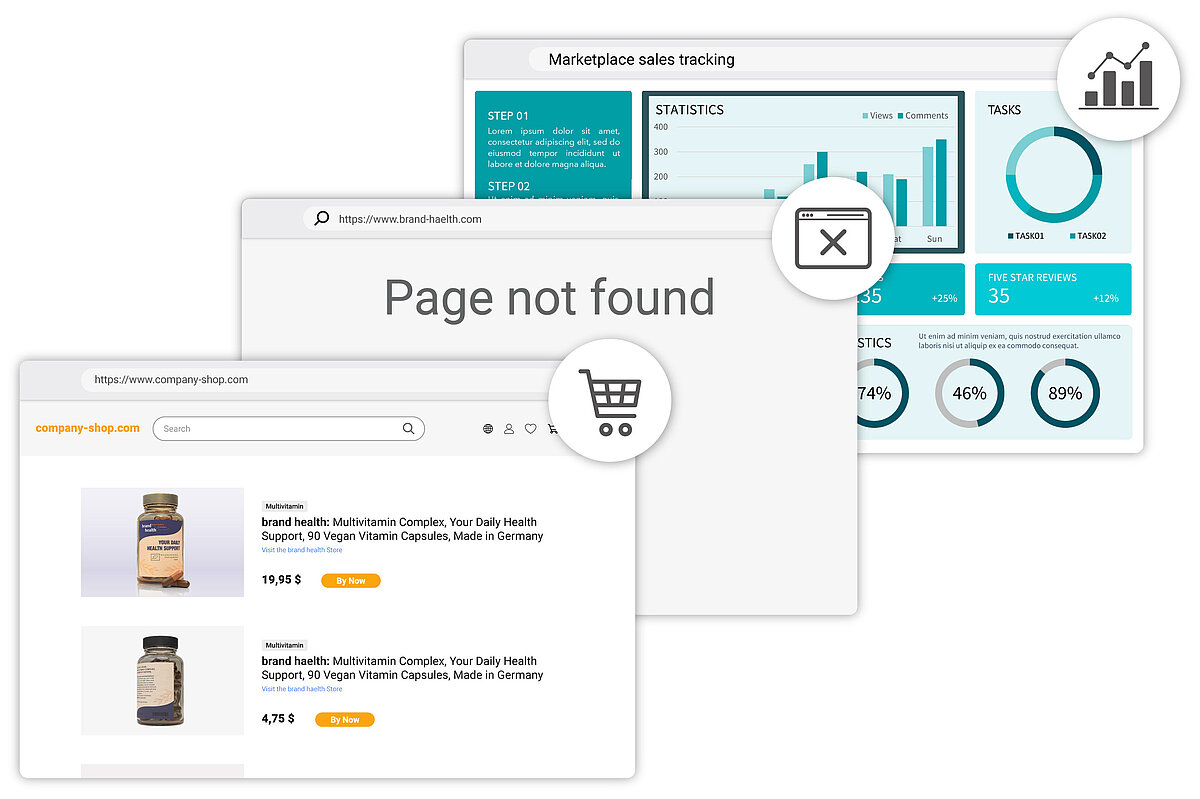
Innovative solutions combine digital technologies with physical security features. The KURZ SCRIBOS brand specializes in such integrated brand protection solutions. By linking physical security features with the SCRIBOS 360 online platform, the company combines product protection, traceability, and consumer interaction:
- Physical protection: Special security labels and features that are applied to products and are difficult to counterfeit.
- Digital authentication: The authenticity of the products can be verified by scanning the security features.
- Track & Trace: Products can be tracked throughout the entire supply chain, which can also be used to detect gray market activities, for example.
- Consumer interaction: Verification also offers added value for end users through additional information and services.
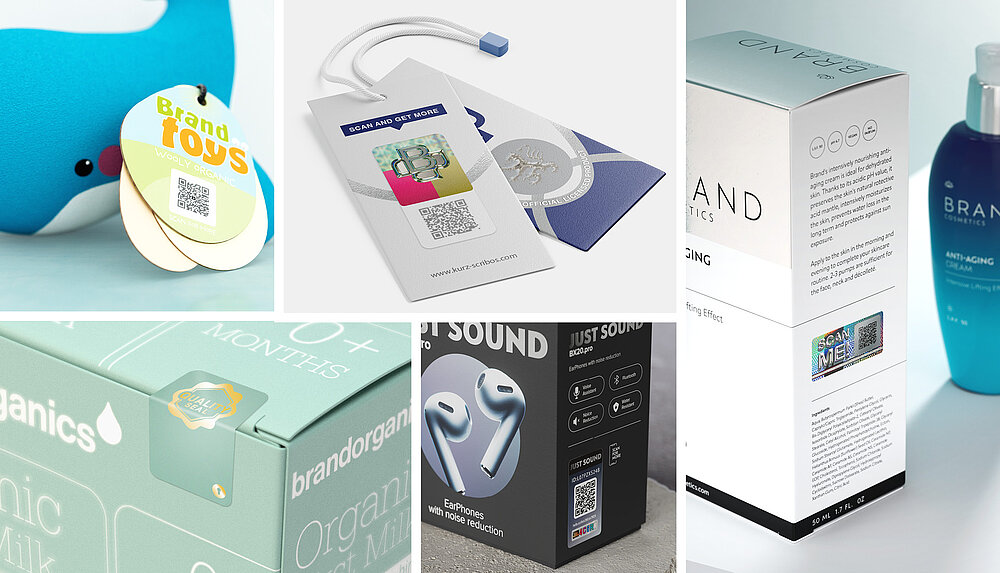
The smart packaging solutions of the KURZ SCRIBOS brand can also offer brand manufacturers further opportunities. In addition to protecting their customers and trading partners from counterfeiting, manufacturers can also open up new ways for interacting with their customers:
- Individual serialization: Each product receives a unique code that confirms its authenticity.
- NFC and RFID: Using their smartphone, customers can authentication products contactless and get additional information.
- Holograms and security printing: visual elements that are difficult to imitate increase the perceived level of security.
- Blockchain integration: This technology ensures immutable documentation of a product history.
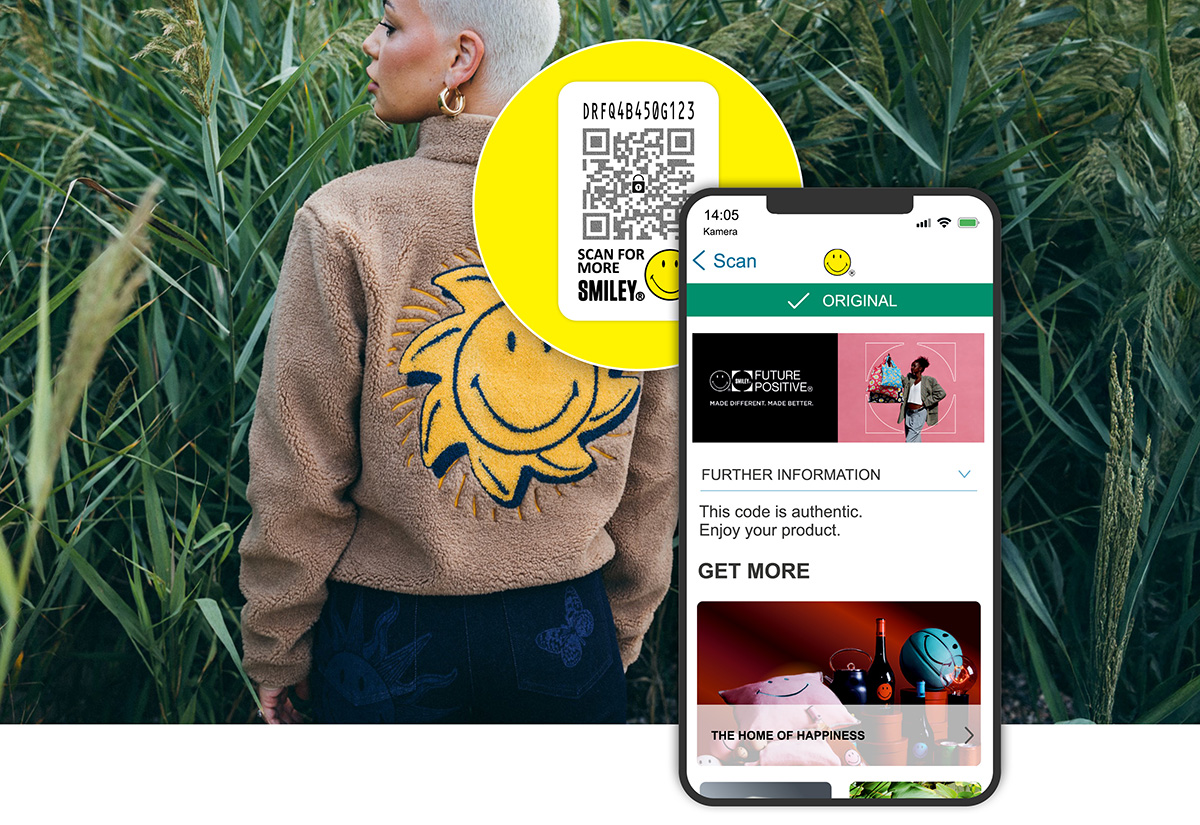
The example of The Smiley Company shows how this can work. The globally renowned company uses the ValiGate® security label, an innovative KURZ SCRIBOS solution, to strengthen the protection of its own brands and enable digital authentication of licensed products. The security label is seamlessly integrated into the SCRIBOS 360 digital platform. It offers physical and digital protection, individual digital identities for product-specific verification, and visually verifiable but technically non-reproducible design elements. The solution thus enables real-time detection of counterfeit products and transparent traceability, while also creating interactive digital brand experiences for end customers.
Another example is KWS Saat, one of the world's largest seed producers, which is using solutions from the KURZ SCRIBOS brand to protect over 30 million seed packages. Each package is given an individual VeoMark® security label and an RFID tag. The data is recorded in the SCRIBOS 360 platform, enabling complete traceability and authentication. In addition, the manufacturer combines the verification of security labels with a dealer incentive program. The solution uncovers gray market activities and optimizes storage and transport processes.
An effective brand protection strategy is a must
The response to counterfeiting on the web is therefore multifaceted. In addition to legal components — i.e., enforcing one's own intellectual property rights and taking action against known infringements — possible steps can also include, for example, monitoring web platforms and networks. This is about continuously monitoring online marketplaces, social media, and websites, which can be implemented using modern software tools, including AI, and various service providers. The KURZ SCRIBOS brand offers these services in cooperation with globaleyez. What is more, digital platforms such as SCRIBOS 360, which connect the physical world of products to the internet with their QR codes and RFID tags, can also play a major role.
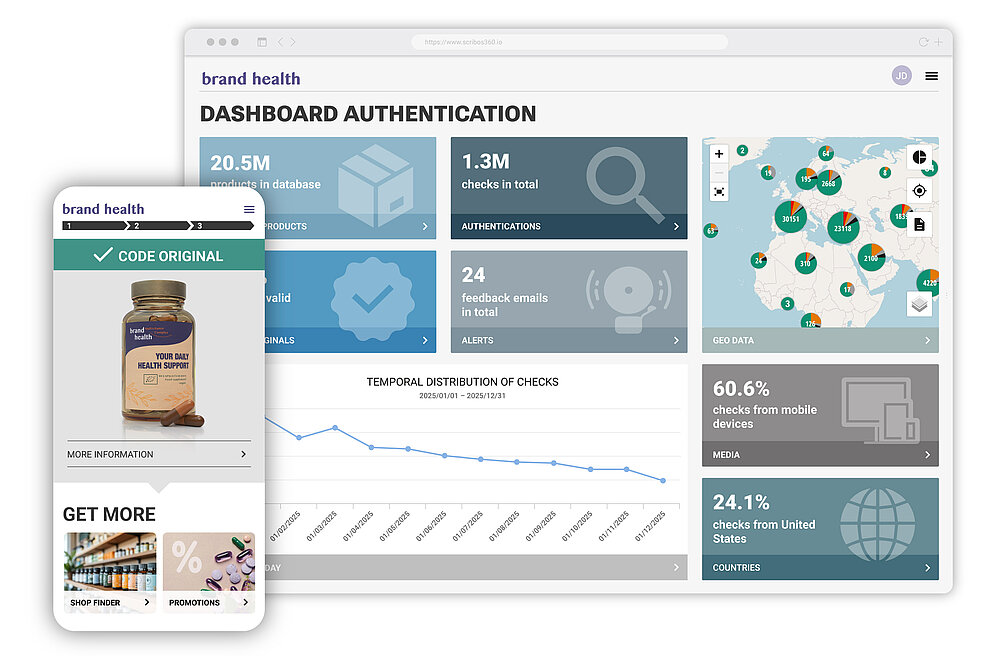
Investing in digital brand protection solutions can pay off for manufacturers in several ways. They have a direct impact and significantly increase brand protection for companies and customers. At the same time, they are long-term investments that enable companies to identify trends and shifts in counterfeiting more quickly — and then respond accordingly.
Those who want to protect their brand in the digital age can develop a comprehensive protection strategy using innovative technologies. Integrated solutions such as SCRIBOS 360, which combines product protection, traceability, and consumer interaction, offer a holistic approach to brand protection strategies, providing effective protection for trademarks, sales, and customer trust.
The fight against counterfeiting in online retail is not a sprint, but a marathon — and it begins with the first step toward digital brand protection.