Counterfeit pet food risks: How brands can protect products, trust and supply chains
Why counterfeit pet food is difficult to measure
The scale of the pet food industry explains why counterfeit and product integrity risks deserve attention. FEDIAF reports 299 million pets in European households and a European pet food market worth €29.3 billion . In the United States, APPA reports USD 68.3 billion in pet food and treat sales. In China, USDA FAS estimates the dog and cat consumer market reached USD 41.9 billion in 2024, with pet food accounting for more than half (52.8%) of pet-related spending.
Reliable statistics on counterfeit pet food itself are difficult to establish because food fraud is designed to avoid detection. The FDA notes that economically motivated adulteration also affects animal food and remains difficult to quantify across global supply chains.
Documented incidents nevertheless demonstrate the potential scale and consequences of the risk. The 2007 melamine-related pet food crisis, associated with thousands of reported pet deaths, led the FDA to investigate contaminated ingredients imported from China. The incident unfolded against the backdrop of enormous import volumes: FDA operations processed approximately 16 million lines of imported products that year, illustrating the challenge of monitoring complex global supply chains. The crisis reportedly resulted in more than USD 40 million in recall costs. Several years later, reports from China documented a different form of product integrity risk, with counterfeit premium pet food being sold in fake packaging.
These incidents illustrate the broader challenge for pet food manufacturers. A counterfeit or adulterated product can quickly become an animal health, consumer trust and reputational crisis. The objective is therefore not simply to respond after suspicious products appear, but to build pet food authentication, traceability and packaging integrity into the product system from the beginning.
Why pet food brands are vulnerable to counterfeit risk
Pet food combines several characteristics that make the category attractive to counterfeiters and unauthorized distributors.
- Recurring consumer demand
Pet food is purchased continuously and often in large volumes. Daily demand creates repeated opportunities for unauthorized sellers to enter the market, particularly across online channels and cross-border commerce
- High-value premium pet food segments
Premium pet food and premium pet nutrition products often command higher prices and benefit from strong consumer loyalty. Breed-specific pet food, veterinary diets, functional pet food and imported pet food products can be particularly attractive targets because counterfeiters can exploit established brand trust while replicating packaging and replacing genuine contents with lower-quality or unsafe substitutes
- Complex distribution networks
Modern pet food supply chains involve manufacturers, co-packers, distributors, retailers, logistics providers, online marketplaces and international resellers. Every additional handover can reduce visibility and make it more difficult to control where products are sold and how they are handled.
For brands selling across multiple countries, imported pet food and cross-border distribution can create additional challenges around product identification, approved channels and market control
- Rapid e-commerce growth
Online marketplaces have changed how consumers buy pet food. In China, USDA FAS identifies platforms such as Tmall, JD.com, Taobao, Douyin and Pinduoduo as major pet product sales channels. Similar marketplace dynamics exist globally, where consumers compare prices across third-party sellers, social commerce platforms and independent web shops
This environment increases exposure to counterfeit listings, unauthorized distribution and gray market activity. For brands, online brand protection therefore needs to complement physical product authentication and packaging security.
What counterfeit pet food looks like
Counterfeit pet food rarely appears in just one form. Brands typically face several overlapping risks.
- Copied packaging
Counterfeiters may replicate logos, packaging formats, claims and other branding elements to create products that appear legitimate at first glance. The risk becomes even greater online, where consumers cannot physically inspect the product before purchase
- Refilled or manipulated packaging
Original or copied packaging may be refilled with diluted, expired or substitute products. In dry pet food bags, wet food pouches and cans, cartons and multipacks, weak packaging integrity can make tampering difficult to detect
- Ingredient substitution and mislabeling
Some counterfeit or fraudulent products falsely claim premium ingredients, nutritional properties or specialized formulas while containing lower-grade alternatives. This creates particular concern for pets with allergies, sensitivities or medical dietary requirements
- Gray market distribution
Not all risks involve fake goods. Genuine pet food products may still enter unauthorized channels, appear in unintended regions or bypass approved distributors. This can compromise pricing, storage conditions, labeling compliance and overall channel control
- Suspicious online listings
Counterfeit and unauthorized products can appear through marketplaces, social commerce platforms and independent web shops. Warning signs may include unusually low pricing, inconsistent product imagery, unclear seller identities and missing verification options
Across all of these scenarios, the core issue is visibility. Without secure product identity and connected pet food authentication data, brands struggle to detect suspicious activity early or understand how widely products are being diverted, manipulated or copied.
Why trust matters more in pet food
Pet owners increasingly view animals as family members. That makes trust central to purchasing decisions.
Consumers expect more than nutritional quality. They expect proof that the product is genuine, unopened and safe to feed. When that confidence is damaged, the impact can extend far beyond a single SKU. A counterfeit pet food incident can undermine trust in the entire brand, including its quality controls, retail network and supply chain oversight.
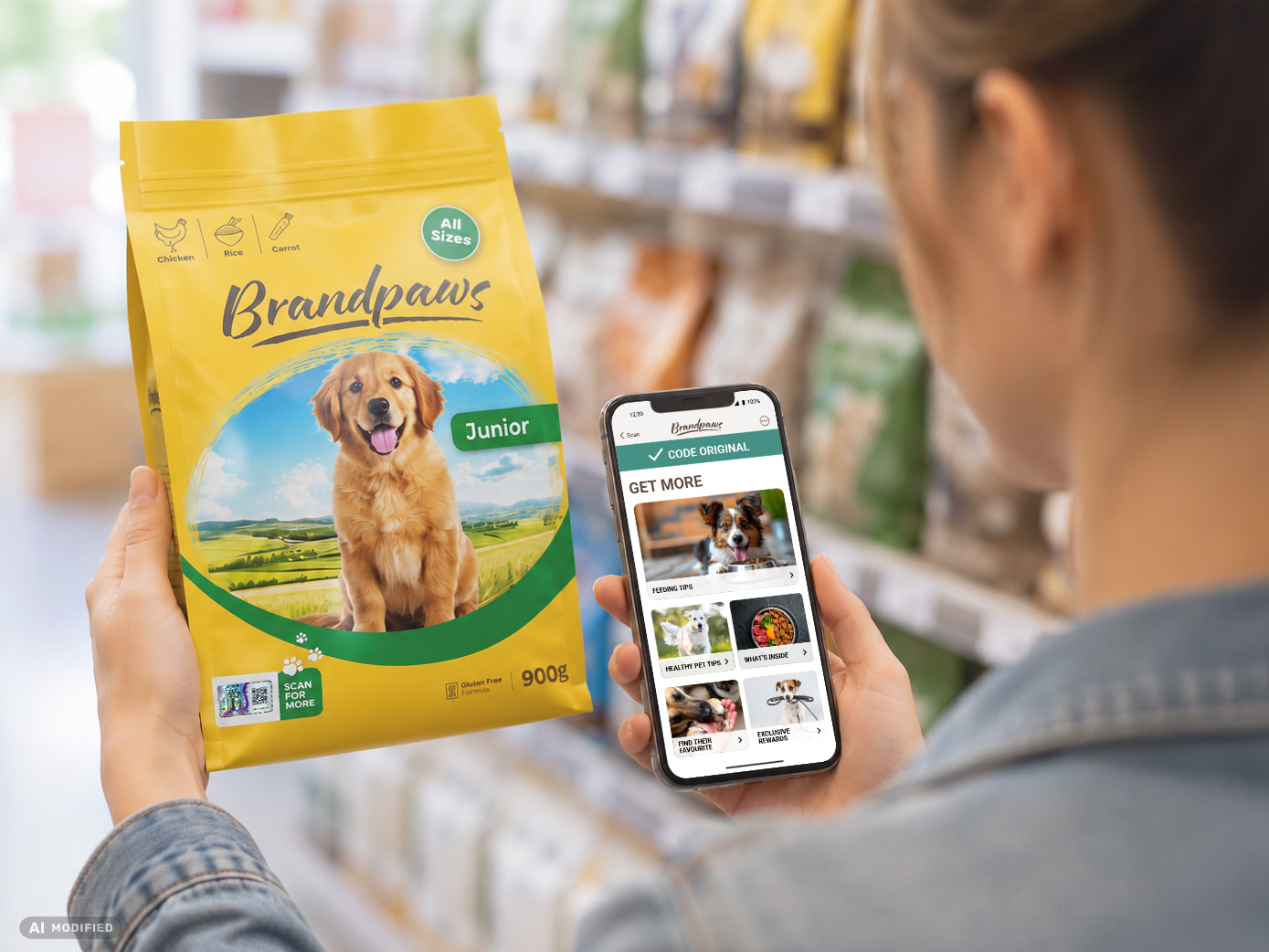
This is why anti-counterfeiting measures should not be treated as decorative packaging features. Effective pet food brand protection combines packaging security, product authentication, traceability, enforcement and consumer communication into a connected product integrity strategy.
What an effective protection strategy should deliver
Single-point solutions rarely address the full scope of counterfeit and gray market risk. Stronger protection combines physical security, digital authentication and data-driven visibility.
An effective pet food brand protection strategy should help brands:
- Make genuine products easy to identify
- Make tampering immediately visible
- Enable fast authentication for consumers, retailers and inspectors
- Detect suspicious scan activity and counterfeit hotspots
- Identify gray market diversion
- Connect product-level intelligence with enforcement actions
- Support customer interaction after authentication
- Improve visibility across physical and digital sales channels
KURZ SCRIBOS applies this layered approach through secure markings, tamper-evident solutions, digital product authentication and SCRIBOS 360 data intelligence.
A practical approach for pet food brands
There is no universal anti-counterfeiting setup for every pet food product. Risk profiles vary across dry pet food, wet pet food, veterinary diets, imported pet food, premium pet nutrition, pet treats and e-commerce packaging.
Brands should begin with a structured assessment:
- Which pet food products face the highest counterfeit or gray-market exposure?
- Which pet food packaging formats are most vulnerable to tampering or refilling?
- Which channels and regions create the greatest risk?
- Who needs to authenticate the product?
- Does the brand require visible security, tamper evidence, digital product authentication or a combined approach?
- How should pet food authentication data connect to online enforcement?
KURZ SCRIBOS supports flexible protection strategies through a broad portfolio of security and brand protection technologies. Depending on the individual requirements, secure labels, direct-print authentication, holographic security, tamper-evident seals, SCRIBOS 360 analytics and Online Brand Protection can form relevant components of a broader protection strategy.
This allows pet food manufacturers to align protection measures with packaging formats, operational requirements and market risks instead of relying on a one-size-fits-all solution.
Selected solutions for pet food brand protection
The KURZ SCRIBOS portfolio offers a range of technologies and services that can be combined according to individual protection requirements. The following solutions are particularly relevant to the needs of pet food brands, from securing high-volume packaging and protecting premium products to authenticating products and addressing counterfeits online.
1. Printed security for high-volume pet food packaging
High-volume pet food packaging requires authentication that scales efficiently without adding unnecessary process complexity.
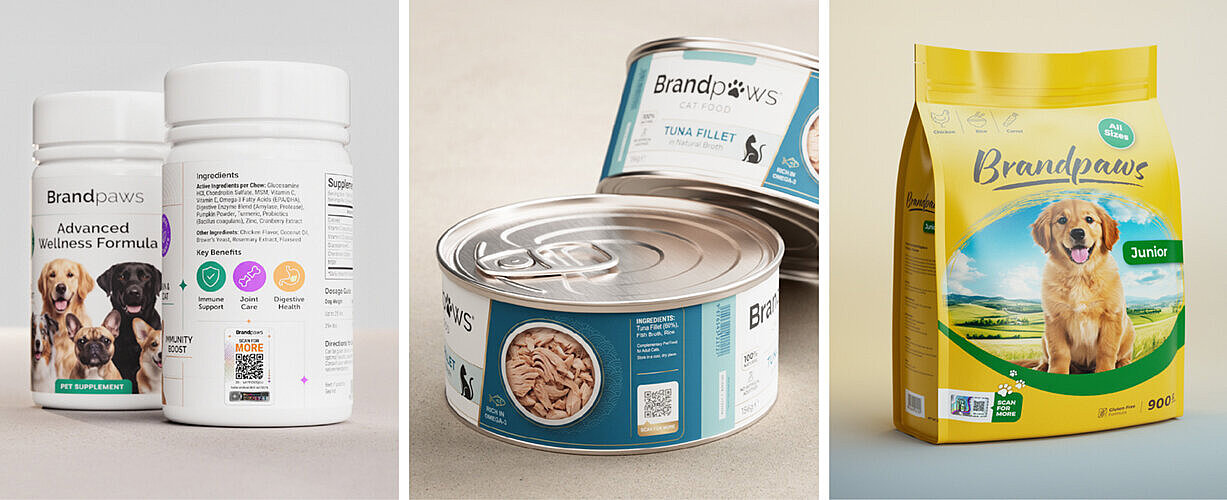
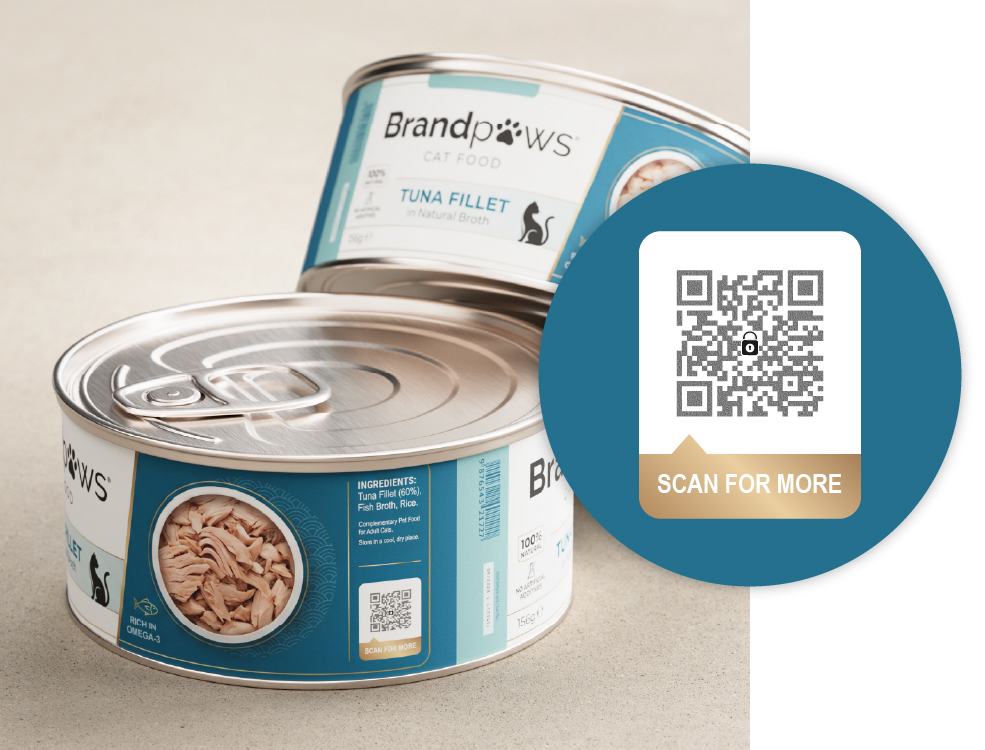
ValiGate® Direct Print integrates a copy-protected QR code directly into packaging artwork or existing label designs. Consumers can verify products through smartphone-based authentication without downloading an app or relying on additional hardware.
For pet food brands, this approach supports dry pet food bags, wet food multipacks, cartons, pouches and pet treat packaging where additional labels may not be operationally preferred. Each secure code also creates a digital touchpoint that generates authentication data and visibility into product movement.
Packaging becomes more than a container. It becomes part of the protection system.
2. Holographic security for premium pet food products
Premium pet food packaging must communicate quality, trust and differentiation. Security features should reinforce that positioning rather than disrupt it.
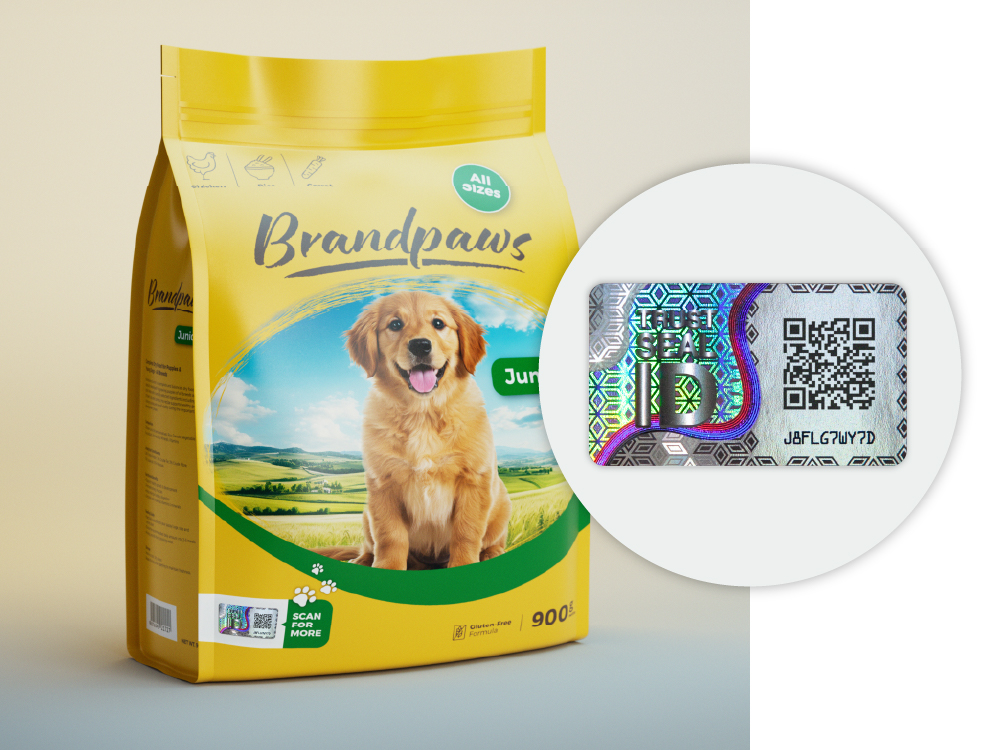
Holographic protection adds visible authentication cues while strengthening shelf presence. Features such as color shifts, motion effects and depth create packaging elements that are difficult to replicate and easy for consumers to recognize.
Solutions such as TRUSTSEAL® ID combine holographic security with QR-based authentication and integration into SCRIBOS 360. This allows brands to pair visible packaging protection with digital verification and customer interaction.
For premium and imported pet food products, this combination supports both brand perception and product authentication.
3. Tamper-evident seals for pet food packaging integrity
Counterfeit risk is not limited to copied products. Refilling, unauthorized opening and product substitution can also compromise packaging integrity.
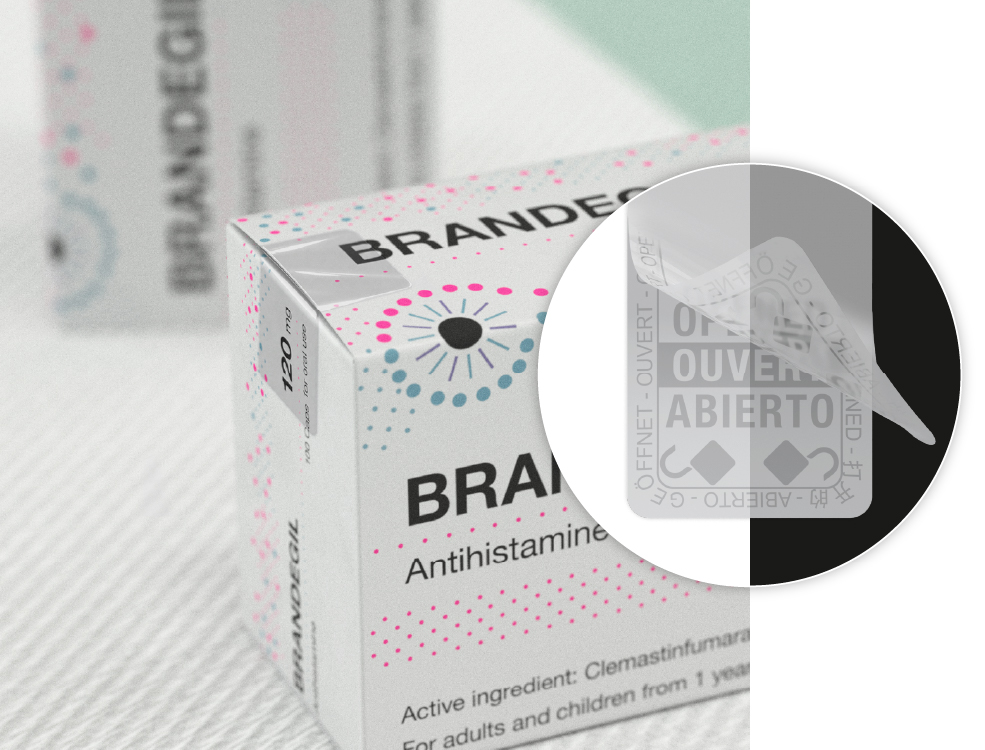
Tamper-evident seals provide visible first-opening indication, helping consumers, retailers and logistics partners identify potential interference before use.
HighPerSeal® security seals leave a visible VOID effect when removed from cardboard packaging, making resealing attempts immediately detectable. Variants such as HighPerSeal® Transparent preserve packaging visibility, while HighPerSeal® Green uses alternative materials such as paper or cellophane.
These solutions are particularly relevant for cartons, multipacks, transport packaging, e-commerce shipments and premium product formats.
SCRIBOS 360: Turning pet food authentication into market intelligence
Pet food authentication has the greatest strategic value when scan events become usable intelligence.
SCRIBOS 360 connects product authentication with real-time analysis and visibility. Each product scan can help brands identify suspicious activity, monitor distribution patterns and detect potential gray market diversion.
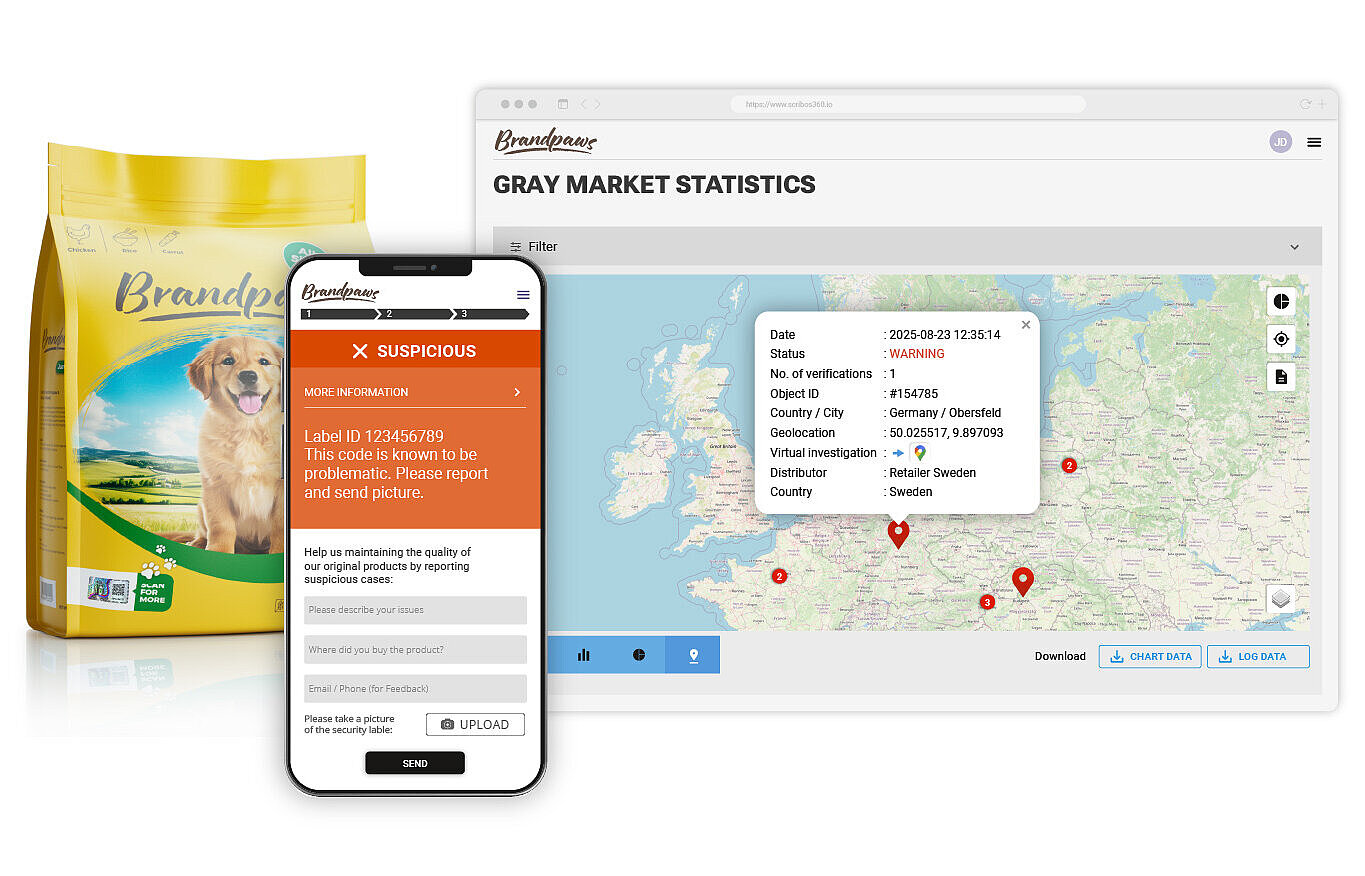
Repeated scans of the same code, failed authentication attempts or scans appearing in unexpected markets can indicate counterfeit risk and trigger investigation.
The platform also supports:
- Geodata-based authentication analysis
- Scan hotspot identification
- Gray market alerts
- Downloadable authentication statistics
Beyond protection, SCRIBOS 360 can also support consumer engagement. After authentication, brands can provide feeding guidance, ingredient details, loyalty content, recall information or sustainability messaging through a secure digital touchpoint.
Online Brand Protection for counterfeit pet food
Counterfeit pet food frequently appears on marketplaces, social commerce platforms and unauthorized web shops. Physical product authentication is therefore most effective when brands can connect suspicious activity with online investigation and enforcement.
KURZ SCRIBOS combines secure product authentication with Online Brand Protection to create an offline-to-online approach to brand protection. Authentication data and counterfeit reports can provide indications of potential infringements and support investigations, evidence gathering and test purchases.
Depending on the protection requirements, online brand protection services can include marketplace monitoring and removal, online and offline test purchases, website and domain investigations, and takedown management.
This connection between physical packaging, digital pet food authentication and online enforcement helps brands move from reactive detection to proactive risk reduction.
Conclusion: Protection, trust and visibility must work together
Counterfeit pet food remains difficult to quantify, but the operational and reputational risks are clear. As premium pet food, e-commerce and cross-border distribution continue to grow, brands need stronger control over authenticity, packaging integrity and market visibility.
Effective protection requires more than a visible security mark. It requires connected product authentication, tamper evidence, supply chain intelligence and enforcement capabilities working together across physical and digital channels.
KURZ SCRIBOS helps brands build this type of integrated protection system through secure packaging, digital authentication, SCRIBOS 360 intelligence and Online Brand Protection.
FAQ
What is counterfeit pet food?
Counterfeit pet food is a product that is deliberately presented as an authentic branded product without being authorized by the brand owner. It may involve copied packaging, fake labels or refilled original packaging. Counterfeit products can contain substituted, diluted, expired or otherwise unauthorized contents, making both authenticity and product integrity difficult to assess.
How can counterfeit pet food enter the market?
Counterfeit pet food can enter through unauthorized distributors, cross-border trade, fragmented supply chains, online marketplaces, social commerce and independent web shops. Counterfeiters may copy packaging to make products look genuine, while unauthorized sellers may also divert authentic products into markets or channels where the brand does not control distribution.
What is the difference between counterfeit pet food and gray market pet food?
Counterfeit pet food is presented as genuine but is not an authentic product authorized by the brand. Gray market pet food, by contrast, can be genuine branded product that is sold through unauthorized channels or in markets for which it was not intended. Both can create challenges around pricing, distribution control, storage, labeling and brand protection, but they require different detection and enforcement approaches.
What are the risks of counterfeit pet food?
Counterfeit pet food can create potential animal health risks if contents are contaminated, substituted, expired or otherwise different from the genuine product. For brands, the consequences can also include consumer complaints, recalls, reputational damage, loss of revenue, reduced consumer trust and limited visibility into unauthorized distribution.
Why is premium pet food particularly attractive to counterfeiters?
Premium pet food and premium pet nutrition products often have higher prices and strong consumer recognition. Breed-specific pet food, veterinary diets, functional pet food and imported pet food can therefore provide attractive targets for counterfeiters, who can exploit established brand trust by reproducing packaging and substituting the contents.
How can consumers check whether pet food is authentic?
Brands can provide a secure product authentication method that allows consumers to verify products using their smartphones. Secure QR codes, printed security features and holographic elements can provide visible or digital authentication cues, while tamper-evident packaging can help consumers identify whether a product has been opened or manipulated.
Can pet food authentication be done without an app?
Yes. App-free smartphone authentication can allow consumers to scan a secure code directly with their phone and access a verification experience without installing dedicated software. This reduces friction at the point where consumers want to check whether a pet food product is genuine.
Why is secure packaging important for pet food?
Packaging is often the first point at which a consumer encounters a product and can therefore play an important role in product authentication and packaging integrity. Secure printed codes, security labels, holographic features and tamper-evident seals can make products more difficult to copy, easier to verify and more resistant to unnoticed manipulation.
How can brands detect counterfeit pet food online?
Online brand protection can combine marketplace monitoring, online research, test purchases and investigations of suspicious websites or domains. When connected with product authentication, scan data and counterfeit reports can provide additional indications of potential infringements and help brands prioritize investigations and takedown actions.
How can pet food authentication help brands identify gray market activity?
Authentication scans can provide information about where and when products are being verified. Patterns such as repeated scans, failed authentication attempts or scans appearing in unexpected markets can indicate potential counterfeit activity or unauthorized distribution. This information can help brands identify suspicious regions, channels and distribution patterns.
What is the role of SCRIBOS 360 in pet food brand protection?
SCRIBOS 360 connects product authentication with data analysis, market intelligence and customer interaction. Authentication events can be analyzed to identify suspicious patterns, scan hotspots and potential gray market activity. The platform can also provide a digital touchpoint for customer communication after authentication.
Can product authentication support customer engagement as well as security?
Yes. A product authentication interaction can become a secure digital touchpoint between a pet food brand and its customer. Depending on the brand’s strategy, it can provide product information, feeding guidance, ingredient details, loyalty content, sustainability information or recall communication alongside the authentication experience.
What is the best anti-counterfeiting solution for pet food brands?
There is no single solution that fits every pet food product or market. An effective strategy should be based on the brand’s individual risk profile and may combine printed security, secure labels, holographic protection, tamper-evident packaging, digital product authentication, SCRIBOS 360 analytics and Online Brand Protection. The right combination depends on the product, packaging format, sales channels, markets and users who need to authenticate the product.